| The Viking Settlement of Ireland, and the Hiberno-Scandinavian Coins of the Dublin & the Irish Sea area. |
|
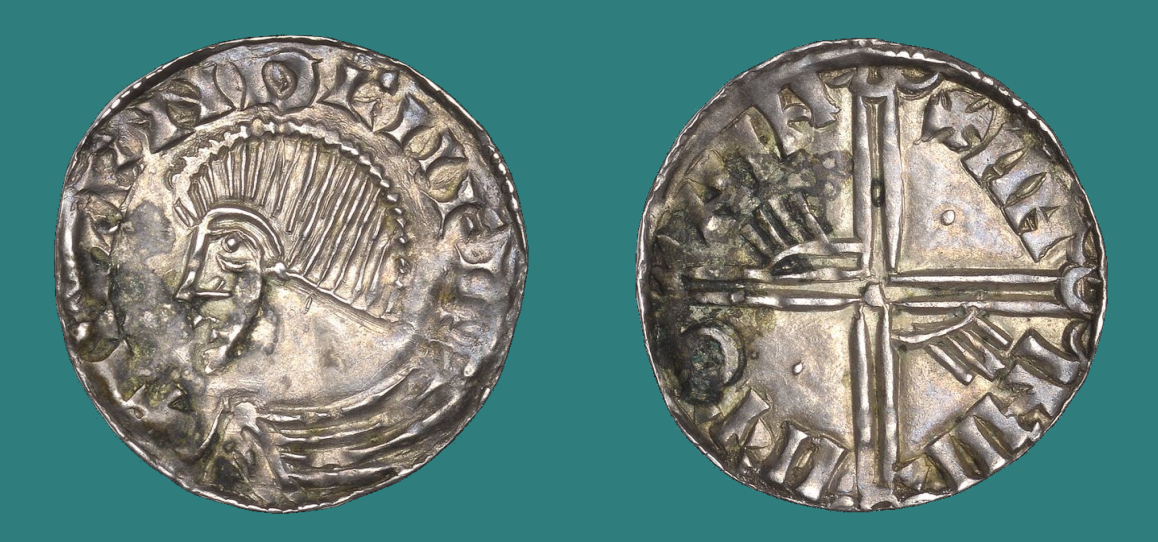
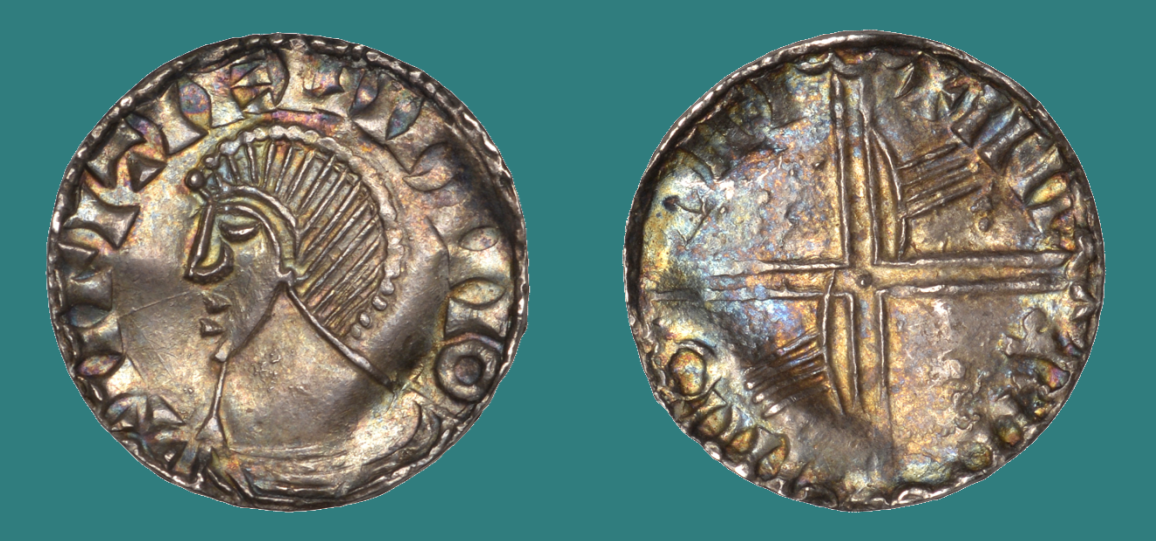
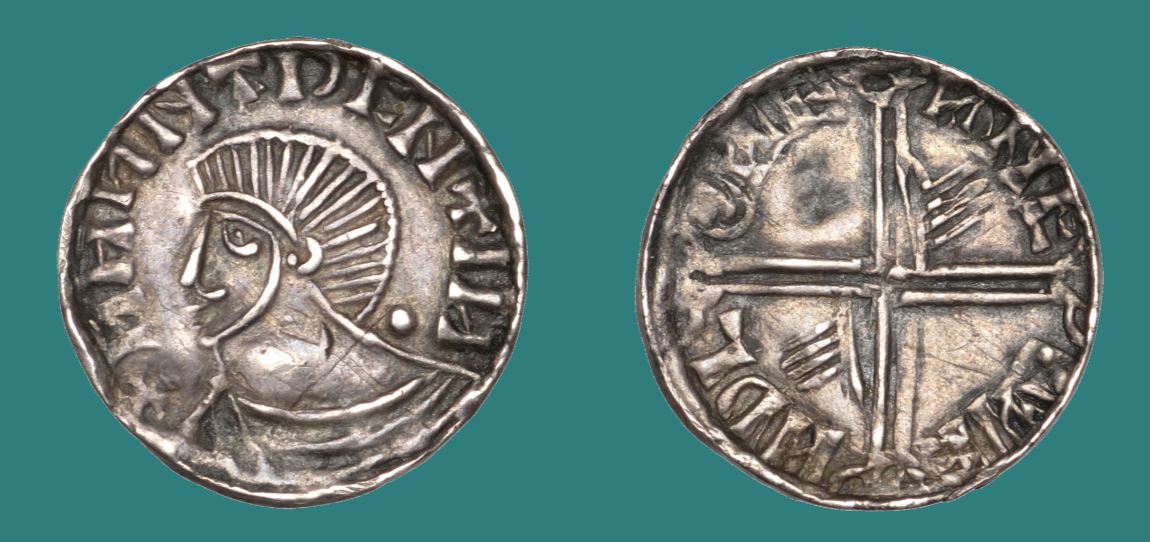
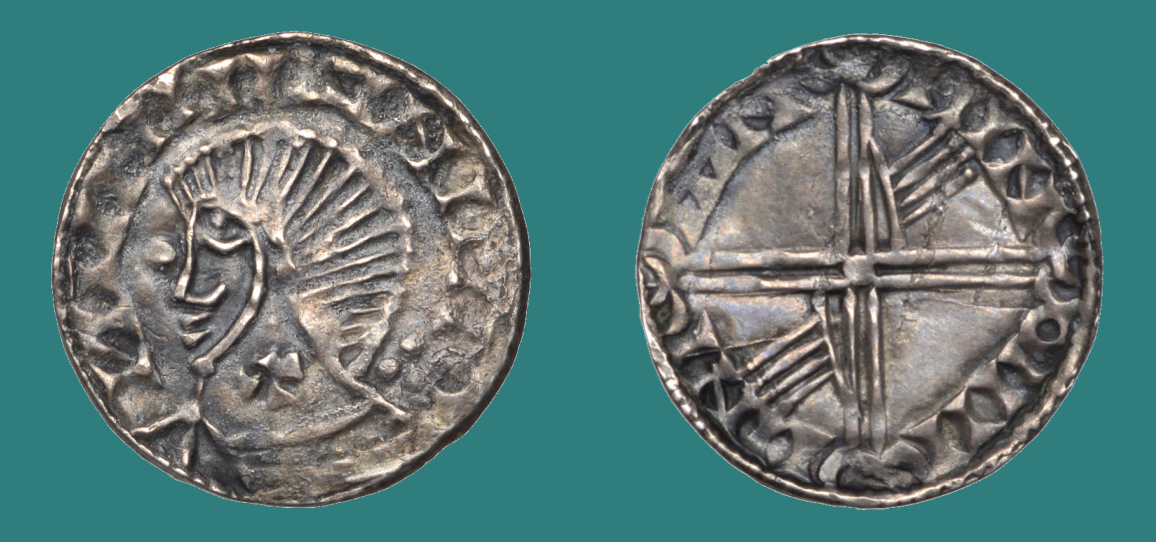
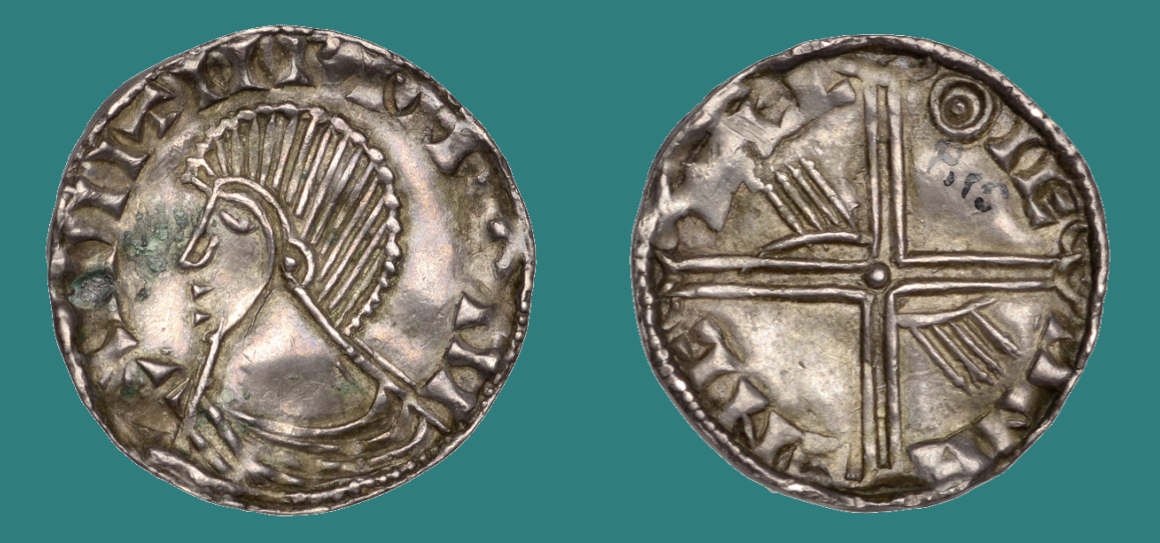
The first recorded Viking raids on Ireland took place in 795 AD, when islands off the north and west coasts were plundered. Later on, Viking fleets appeared on the major river systems and fortified bases for more extensive raiding are mentioned from about 840AD. Monasteries were one of the main targets of Viking raiders because they were likely to contain valuables and people to be sold as slaves. Dublin was one of the early fortified bases established by Vikings in 841AD, but the first coins minted in Dublin were not produced until around the year 997 AD. These coins, are now referred to as "Hiberno-Norse", or Hiberno-Scandinavian coins, and were produced throughout the 11th century. Minting began when the Hiberno-Norse king of Dublin, Sihtric Anlafsson, authorized the striking of coins to pay for the town's defenses. Copying directly from contemporary issues of Æthelred II (979-1016) & Cnut (1016-1035), these pennies bear the name Sihtric, or occasionally Æthelred, on the obverse, and the moneyer & mint name of Dublin on the reverse.
|
| |
|
Phase II |
|
|
| |
|
Obv: Single Symbol - Usually Behind the Neck |
|
|
|
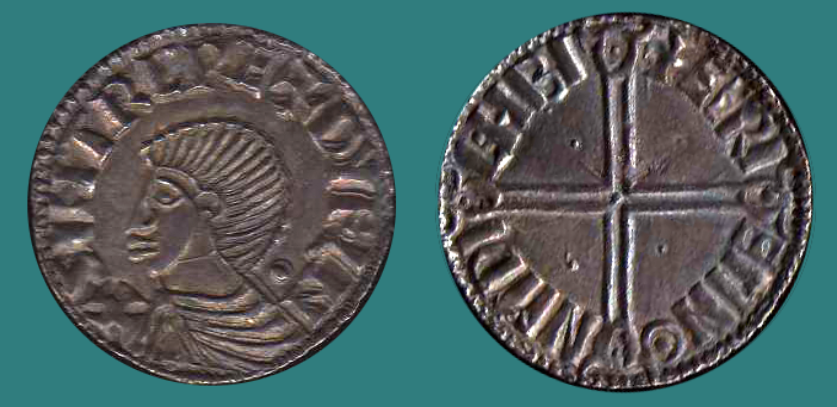
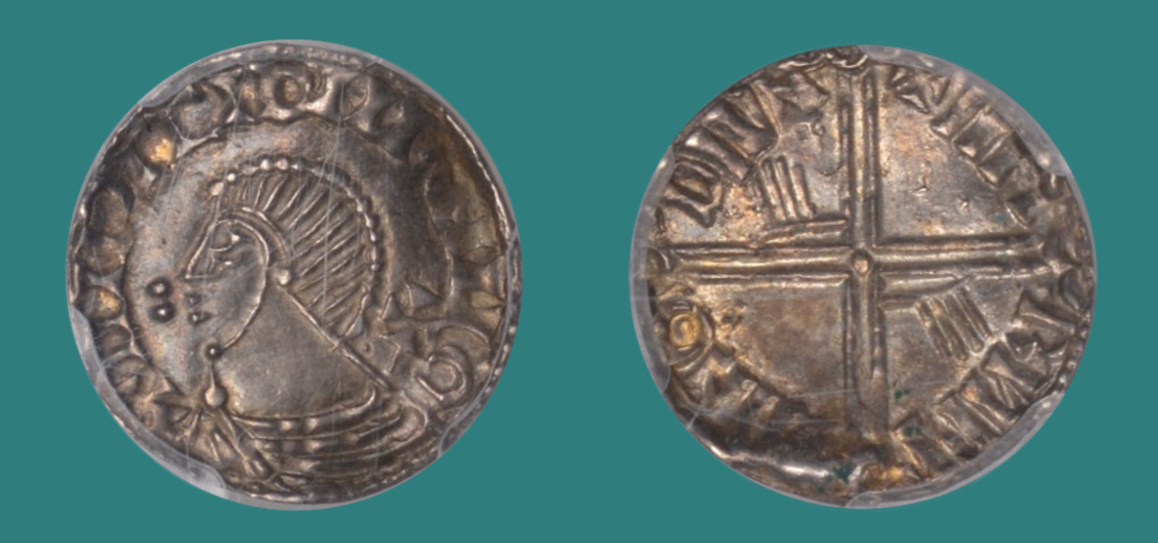
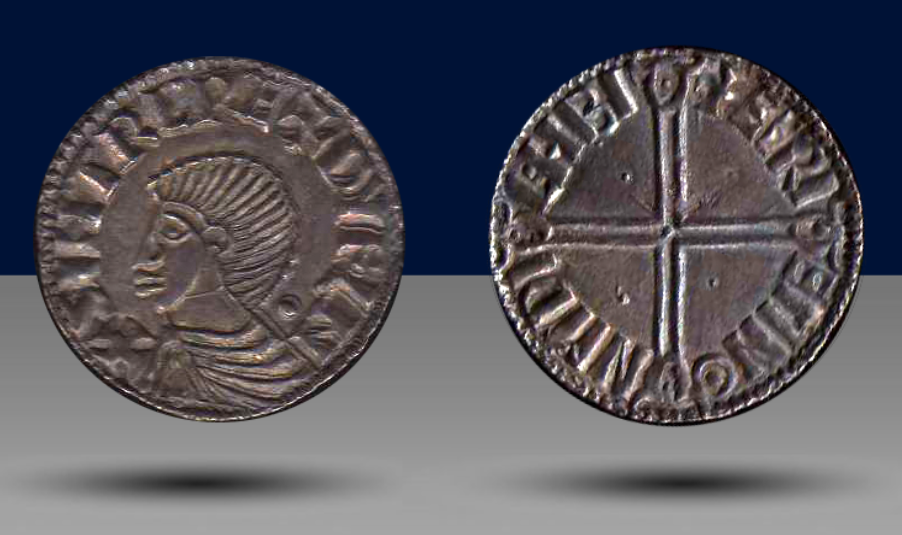
Phase II - Early
- Obv: pellet behind neck
- Symbol locations type: A
- Obv legend: + SIHTRIC REX DYFLN
- Reverse: small pellet in each quadrant
- Rev. legend: + EIRI EMNO NMDI LHBI
- Weight:: 1.47 gm
- Diameter: 19 mm
- My ref # 1068
|
|
 |
|
A Phase II issue of Sihtric III, probably issued in Dublin around 1020 AD. Coins such as this one imitate the English Aethelred Long Cross type. The coin is practically in mint state with some original lustre, and at 1.47 gm it is heavy compared to the range quoted by Blackburn of 1.29 gm for early Phase II down to 0.7 gm for very late Phase II; it is therefore likely to be earliest Phase II. Also note that most Phase II issues show the moneyer as FÆREMIN on the reverse, however this coin has a different moneyer signature. The relatively high weight and unusual moneyer suggest one of the rarer varieties of Phase II.
|
| Given the condition of the above coin it was probably hoarded soon after it was minted. The major 2003 Glenfaba hoard contains many Phase II coins but they are all in the Manx Museum; instead, a possible provenance is either Kirk Lonan on the IOM (1786), Kilkenny (1791), Kilmainham (1797), or elsewhere. |
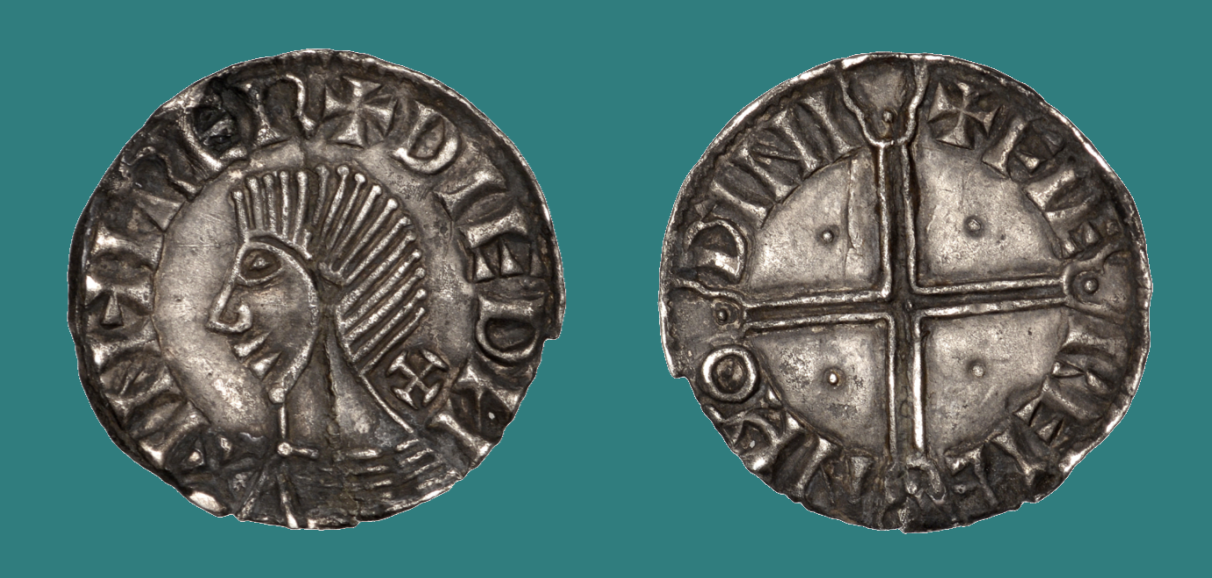
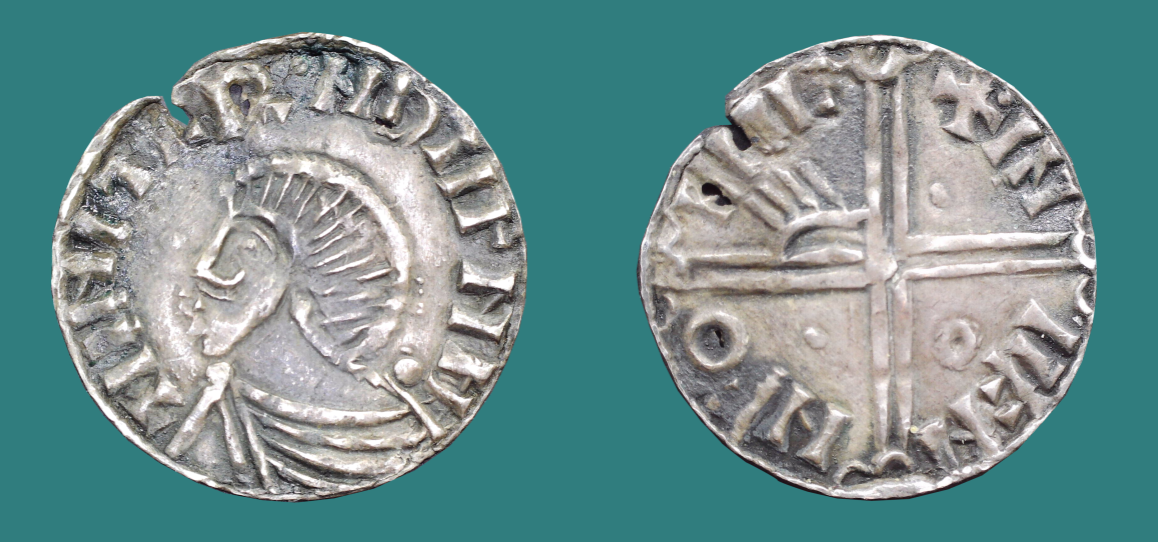
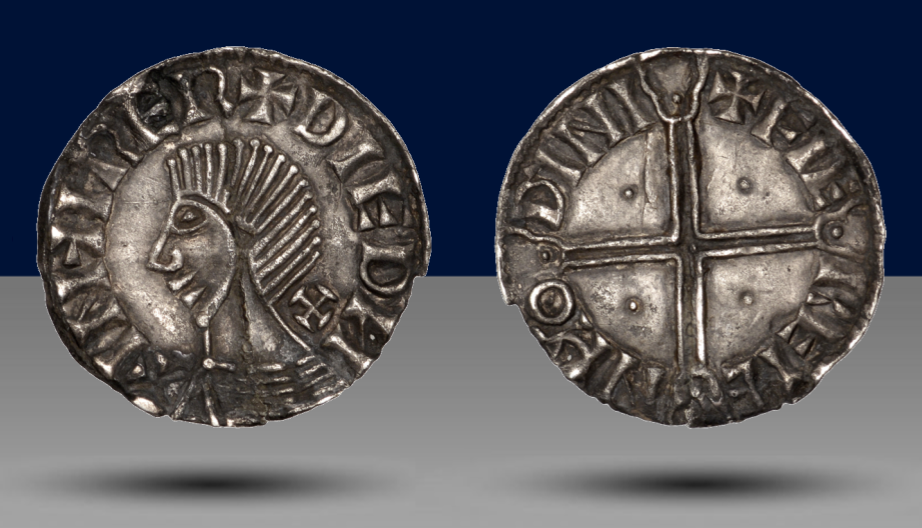
Phase II - Irish Sea area mint?
- Obv: cross behind neck
- Symbol locations type: A
- Obv legend: +INIHRER+DIEDN
- Reverse: small pellet in each quadrant
- Rev. legend: +FIE REME NMO DINI
- Weight: 1.06 gm
- Diameter:
- Provenance: ‘Viking’ Collection [J.F. Chown], Spink Auction 150, 14 March 2001, lot 1100; SNC February 2008 (IH0168); ‘Good Money’ Collection, Noonans Auction 259, 27 September 2022, lot 528
- My ref # 2498
|
|
 |
|
According to Kristin Bornholdt Collins, Hiberno-Scandinavian Dublin was not the only community in the Irish Sea area that could sustain a mint; coins from a mint on the Isle of Man have been known since the work by Dolley in the 1960s and 70s, and nowadays it is recognised that one or more additional mints may have existed in the Irish Sea area during the early 11th century. At first sight this coin may appear to be a Phase II coin of Sihtric from the Dublin mint, however in addition to the somewhat unusual obverse bust style, the coin has some indications that it is not a Dublin issue but minted elsewhere in the Irish Sea area.
|
|
It should be noted that there is a huge range and variety in the Phase II Dublin coinage, and the assignment of the above coin to a non-Dublin mint can only be regarded as tentative. There is no exact match with the Isle of Man coins detailed in a recently published sylloge volume by Kristin Bornholdt Collins, though there are some similarities with a few coins identified by her as imitations from an unknown Irish Sea area mint, particularly SCBI 73, coins #963 and #964, both from the Glenfaba hoard. The obverse legend clearly reads ….RER rather than …RC R. The spelling is important as this is one of the features which suggests a link to some of the non-Dublin Irish Sea area coins such as in SCBI 73, coin #964. Other features which are indicative of a non-Dublin coin are the style of the terminations of the long cross on the reverse, with the large gumdrop-like florets with a pellet in each, and the spindly form of the cross located behind the neck on the obverse.
|
| |
|
Multiple Obverse Symbols |
|
|
|
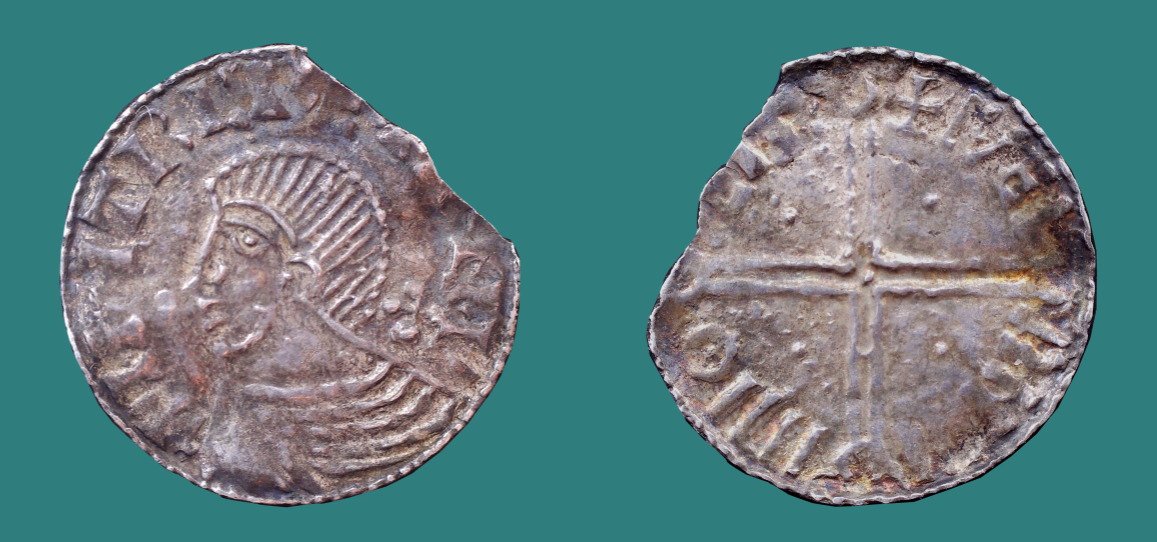
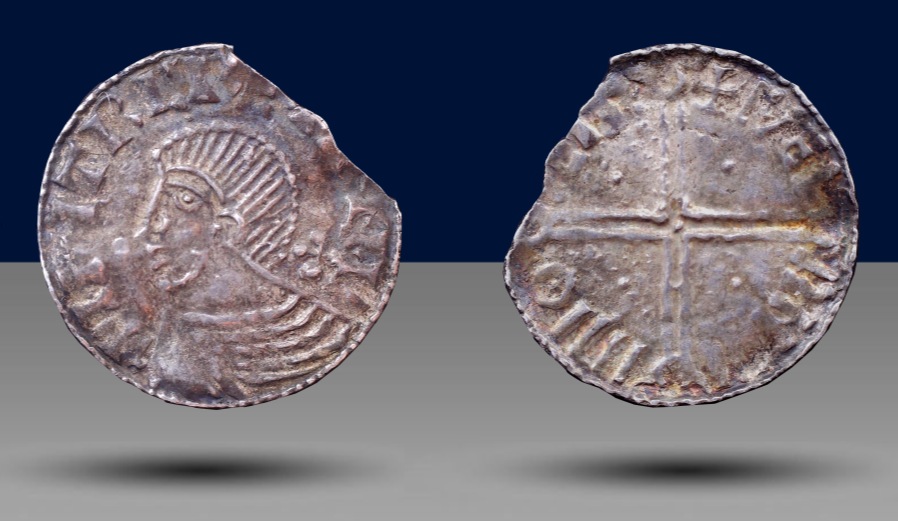
Phase II
- Obv: cross with pelleted ends (cross pommée) behind the neck, and possible pellet in front of face.
- Symbol locations type: B
- Obv legend: DHTRC RE+ IFNL
- Reverse: small pellet in each quadrant
- Rev. legend: blundered.
- Weight: xxx
- Diameter: xxx
- Refs: SCBI [Ulster], 92; SCBI [BM], 72; SCBI [Copenhagen] 79-80 same dies)
- Provenance: Spink auction 23006, 28-09-23, pt lot # 70.
- My ref # 2504
|
|
 |
|
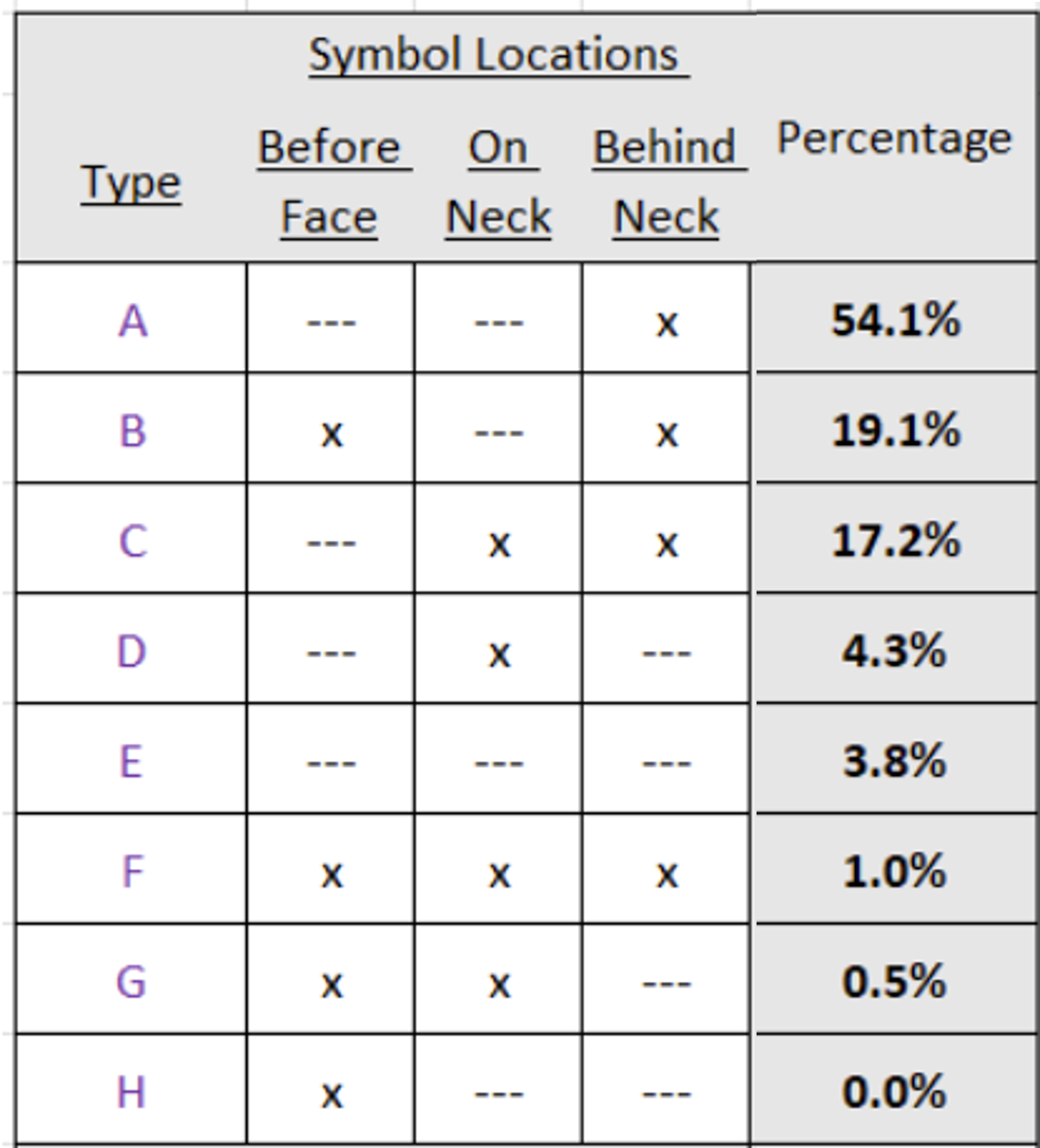
A study published on the BNS Research Blog in April 2024 considers the Phase II obverse types, and shows the relative abundance of differring arrangements of obverse symbols.
The following list is based on analysis of 209 Phase II specimens. In the horizontal legend the presence of an “X” indicates where symbols are located, in front of the head, on the neck and behind the head. Clearly the commonest obverse type is the one that only has a symbol behind the head. Other types are scarcer, some particularly so. Coins with a cross behind the neck sometimes also show one or more pellets behind the head, however this type has not been differentiated here.
|
|
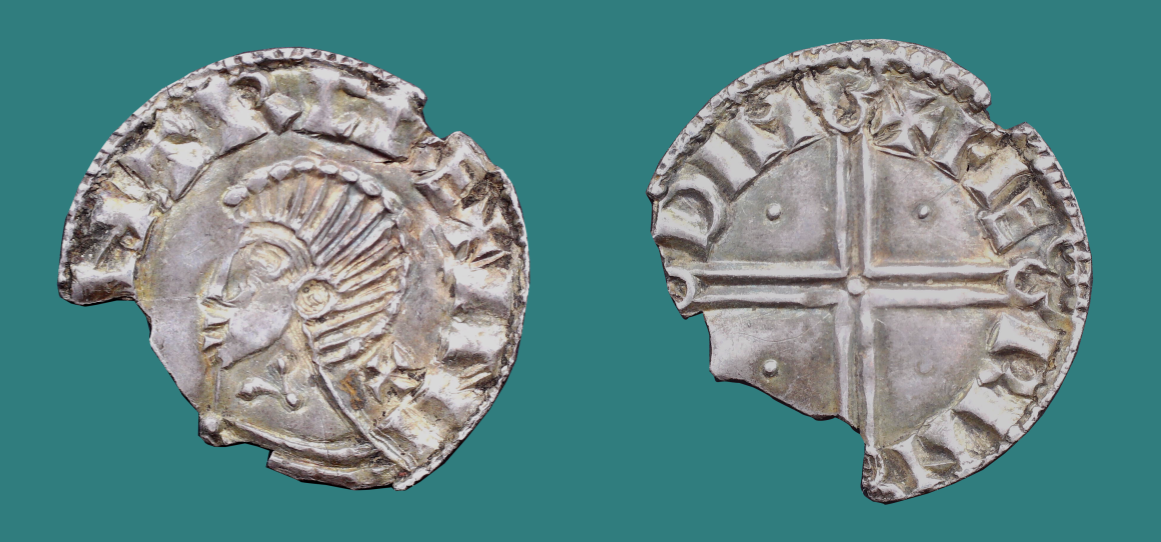
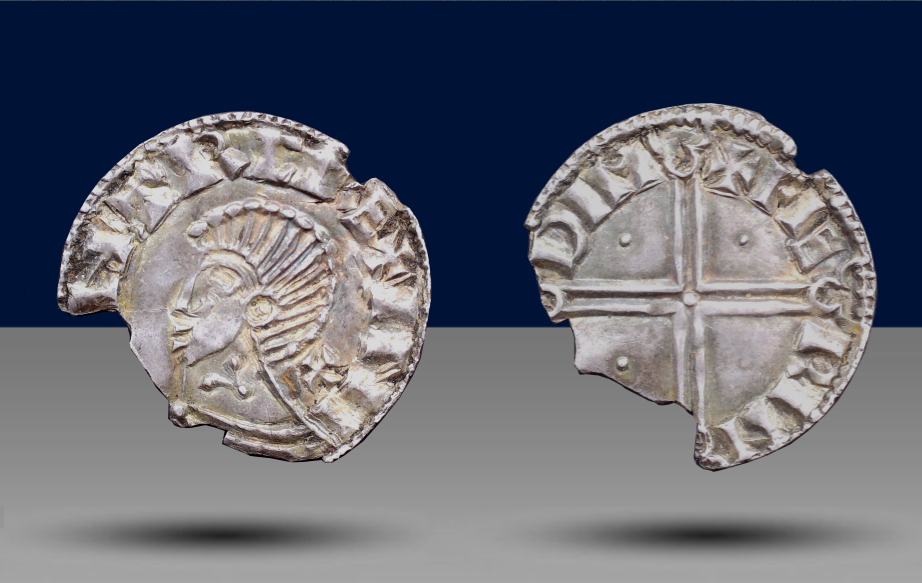
Phase II
- Obv: with furcula wishbone on neck and cross pattée behind.
- Symbol locations type: C
- Obv legend: [...]HTRC REX+
- Reverse: small pellet in each quadrant
- Rev. legend: +FIE/RIN/[ ]/DIM
- Weight: 0.99 gm
- Diameter: xxx
- Provenance: Spink auction 23006, 28-09-23, pt lot # 70.
- Refs: cf. SCBI [Ulster], 96 Spink 6125
- My ref # 2505
|
|
 |
|
|
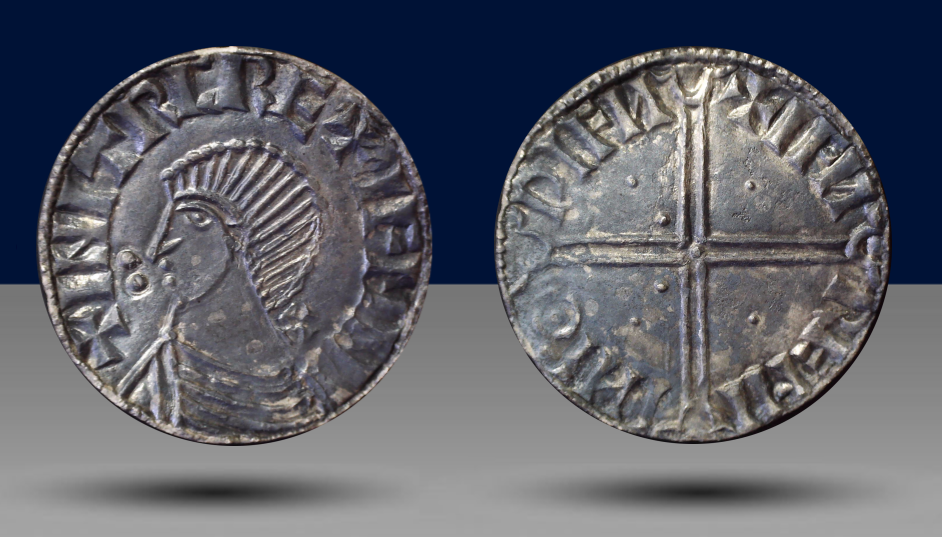
Phase II
- Obv: two pellets before face, cross pattee behind neck.
- Symbol locations type: B
- Obv legend: +INITRCRE+IFNN
- Reverse: small pellet in each quadrant, extra pellets in 3rd and 4th quadrants.
- Rev. legend: +IFN/REMI/INIO/DIFN
- Weight: 1.18 gm
- Diameter: 18 mm
- My ref # 2510
|
|
 |
|
| |
|
|
|
|
| |
|
Phase III - with two "hands" on the reverse |
|
|
|
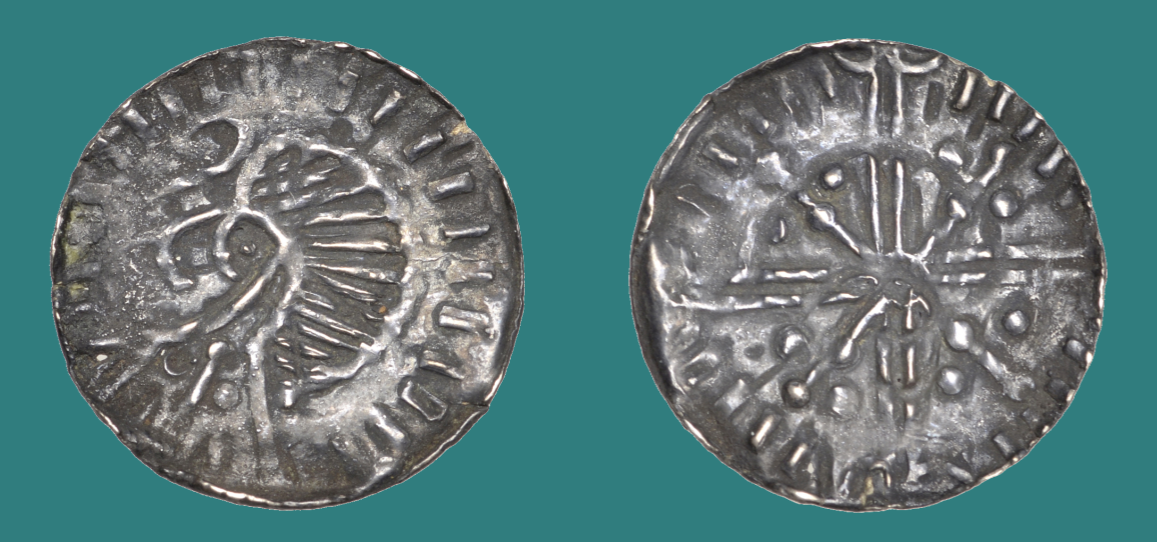
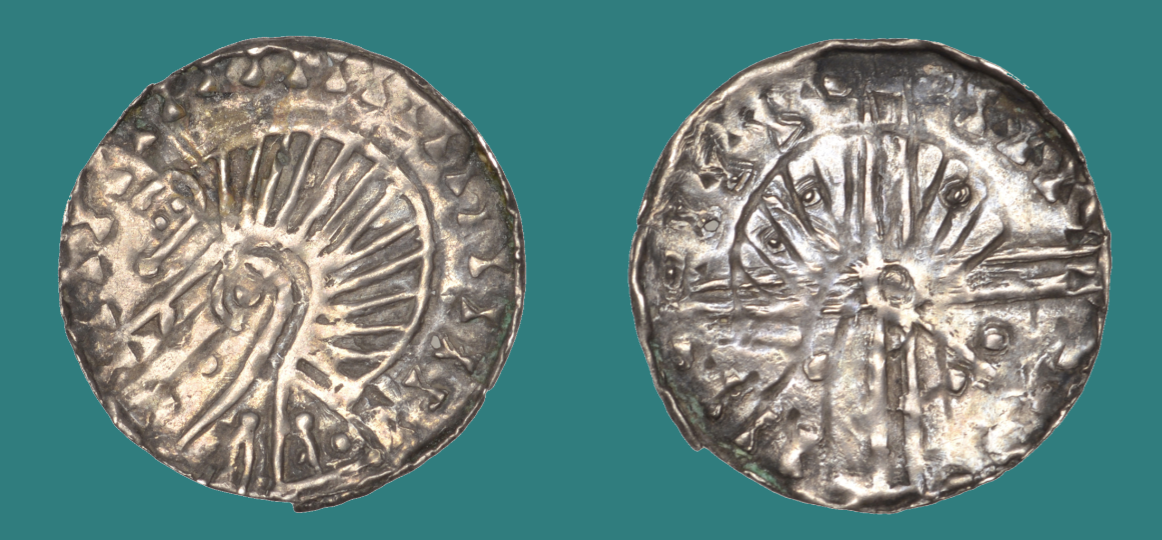
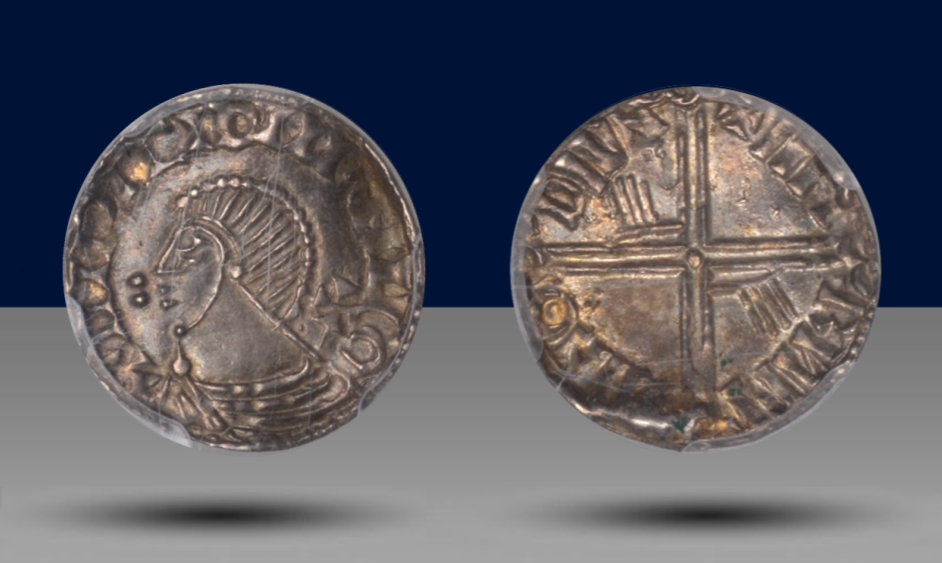
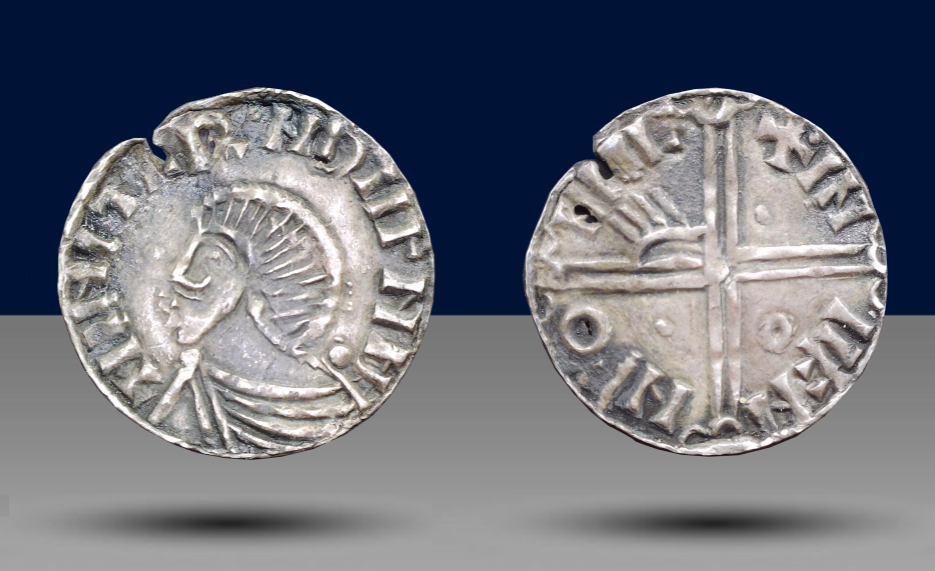
Phase III – Long Cross and Hands issues: This is the most common type of Hiberno-Norse coinage and is often seen at auction and in dealers’ inventories. The Dublin Vikings were in decline after the Battle of Clontarf and, by 1035 AD, the coinage minted in Dublin had degraded to a point where it is likely that it was only being produced for internal use within Ireland as it had fallen below the standards used in any neighbouring regions.
The coins are smaller and of poorer quality silver, they have legends made up of strokes and symbols rather than lettering, the symbol of the human hand appears on many coins in one or more commonly two quarters of the reverse cross. The native Irish had no culture of coinage and their experience with the brief earlier issues was clearly insufficient to enable them to continue minting to a high standard following the transfer of power from the Dublin Vikings to the native Irish chieftains and High kings. This phase of Hiberno Norse coinage continued until about 1060 AD.
|
| |
|
No Obverse Symbols |
|
|
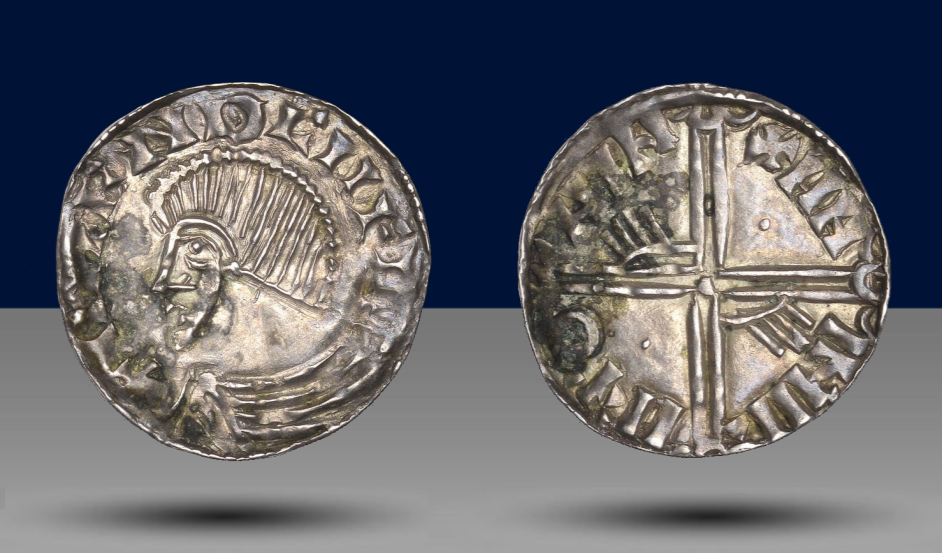
Phase III
- Obv: no symbols
- Obv legend:
- Reverse: ong voided cross, hand in two quarters, pellets in alternate quadrants,
- Rev. legend: +HH INII M[IO] [ ]N
- Weight: 1.04 gm
- Diameter: xxx
- Provenance: DNW, Lot 1175, May 13th 2015.
- Refs: S 6132; DF 24
- My ref # 2000
|
|
 |
|
|
|
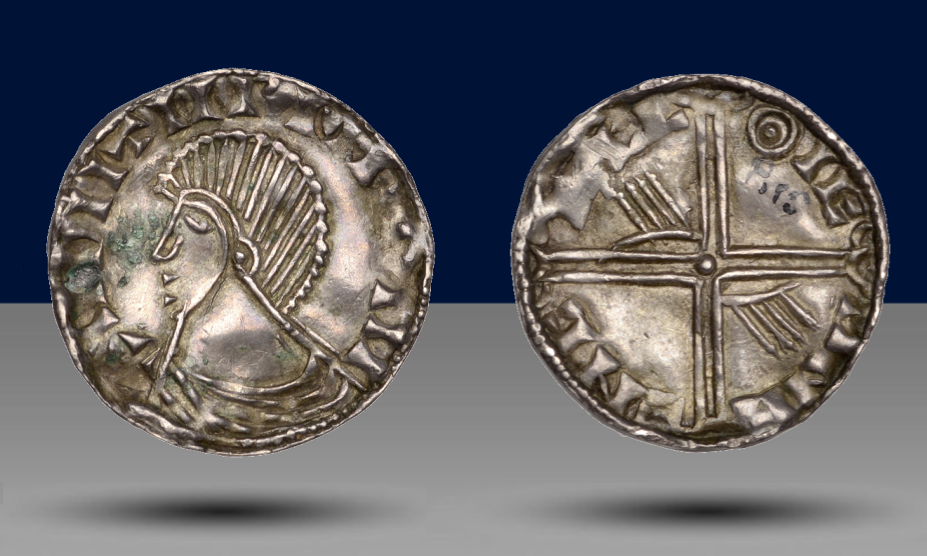
Phase III
- Obv: no symbols
- Obv legend:
- Reverse: small pellet in each quadrant
- Rev. legend:
- Weight:
- Diameter:
- My ref # 2499
|
|
 |
|
|
|
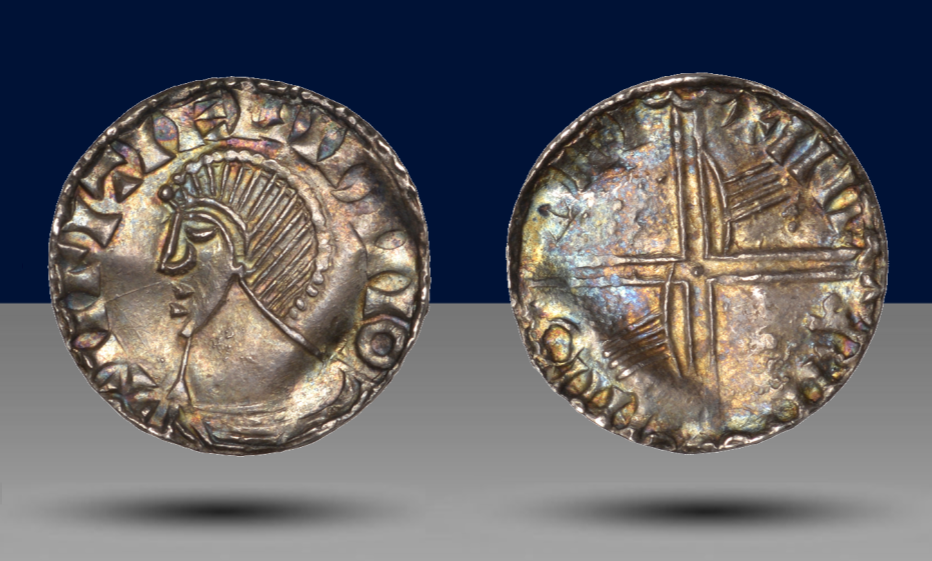
Phase III
- Obv: no symbols
- Obv legend:
- Reverse: small pellet in each quadrant
- Rev. legend:
- Weight:
- Diameter:
- My ref # 2500
|
|
 |
|
|
| |
|
One Obverse Symbol |
|
|
|
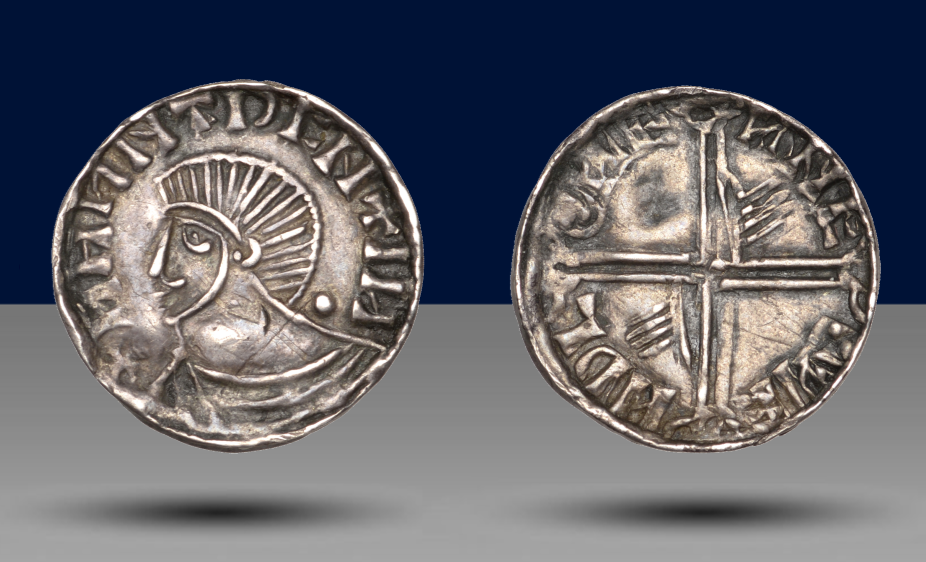
Phase III
- Obv: pellet behind neck
- Obv legend:
- Reverse: small pellet in each quadrant
- Rev. legend:
- Weight:
- Diameter:
- My ref # 2501
|
|
 |
|
|
| |
|
Multiple Obverse Symbols |
|
|
|
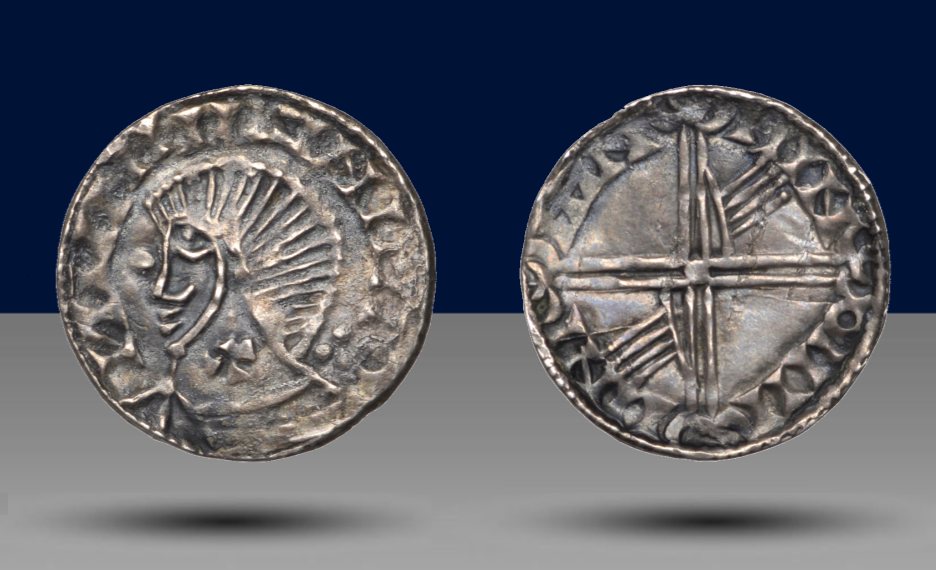
Phase III
- Obv: pellet behind neck
- Obv legend:
- Reverse: small pellet in each quadrant
- Rev. legend:
- Weight:
- Diameter:
- My ref # 6161
|
|
 |
|
|
|
NEED NEW PHOTO
Phase III
- Obv: pellet behind neck
- Obv legend:
- Reverse: small pellet in each quadrant
- Rev. legend:
- Weight:
- Diameter:
- My ref # 6162
|
|
 |
|
|
| |
|
Phase III - with one "hand" on the reverse |
|
|
|
Phase III
- Obv: pellet behind neck
- Obv legend:
- Reverse: small pellet in each quadrant
- Rev. legend:
- Weight:
- Diameter:
- My ref # 2506
|
|
 |
|
|
| |
|
Phase VI |
|
|
|
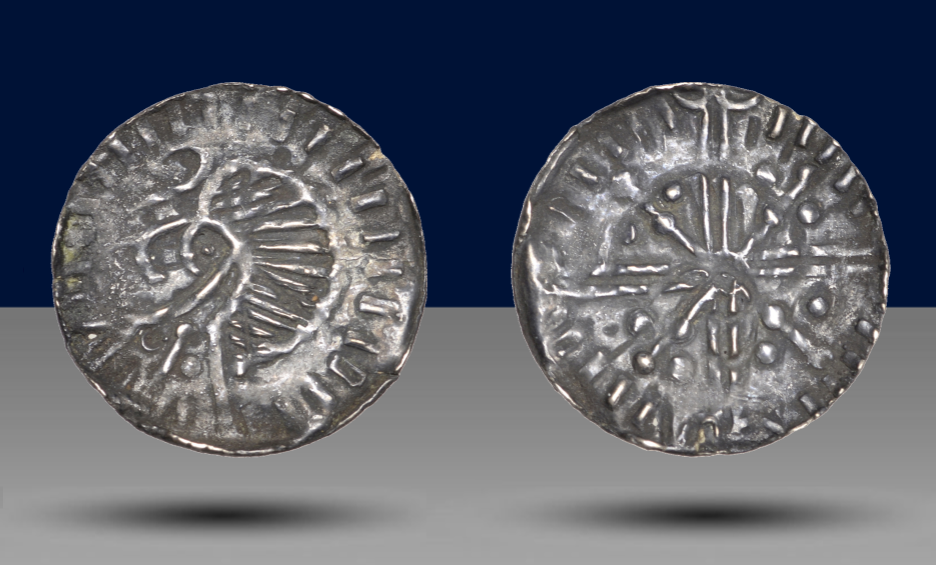
Phase VI
- Obv: pellet behind neck
- Obv legend:
- Reverse: small pellet in each quadrant
- Rev. legend:
- Weight:
- Diameter:
- My ref # 2502
|
|
 |
|
|
|
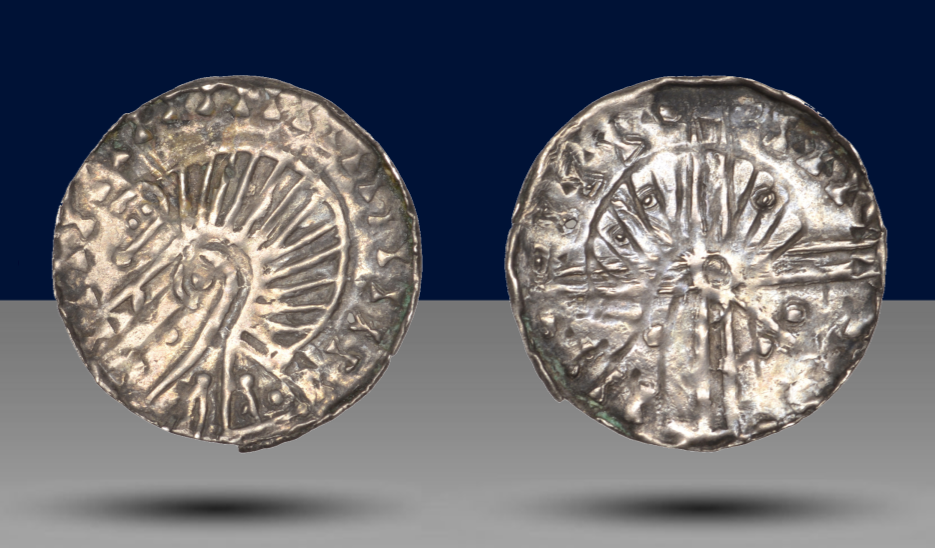
Phase VI
- Obv: pellet behind neck
- Obv legend:
- Reverse: small pellet in each quadrant
- Rev. legend:
- Weight:
- Diameter:
- My ref # 2503
|
|
 |
|
|