
c.1470-1553
|
In England this period covers the 2nd reign of Edward IV, (1471 until his death in 1483) and the reigns of Edward V (1483), Richard III (1483-85), Henry VII (1485-1509), and Henry VIII (1509-53). This time period sees the conclusion of the Wars of the Roses which were a series of civil wars fought over control of the English throne from 1455 to 1487. They were fought between supporters of the House of Lancaster and House of York, two rival cadet branches of the royal House of Plantagenet. The conflict resulted in the end of Lancaster's male line in 1471, leaving the Tudor family to inherit their claim to the throne through the female line. Conflict was largely brought to an end upon the union of the two houses through marriage, creating the Tudor dynasty that would subsequently rule England. |
||||
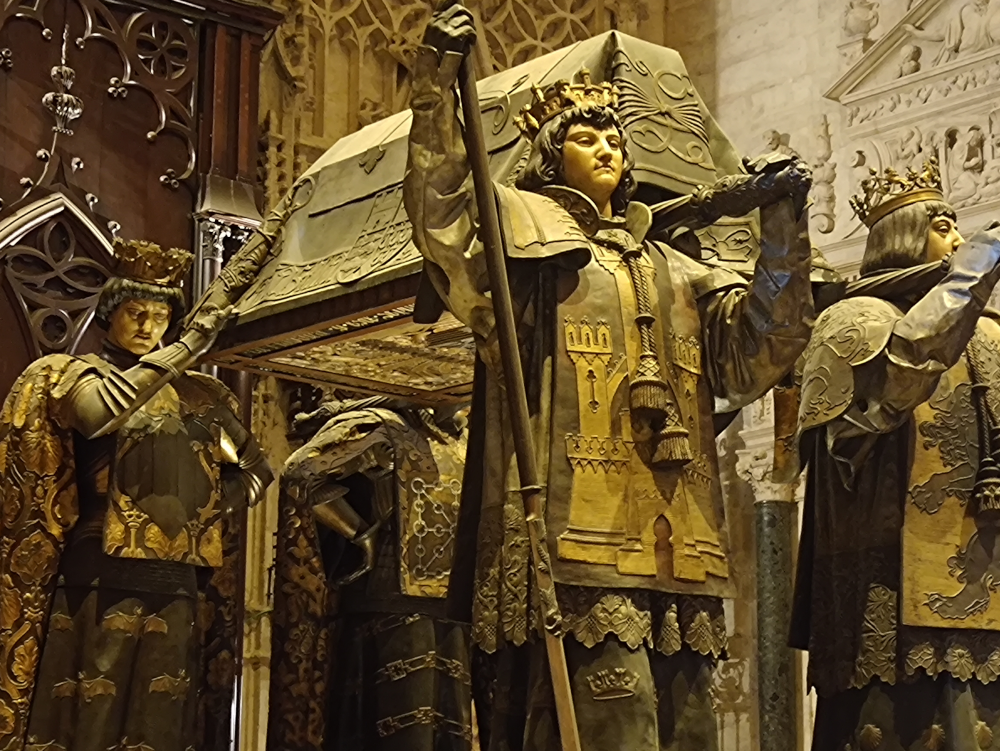 Tomb of Columbus, Seville Cathedral. Tomb of Columbus, Seville Cathedral. |
In Spain the 1469 marriage of the Catholic Monarchs Queen Isabella I of Castile (r. 1474–1504) and King Ferdinand II of Aragon (r. 1479–1516), and their subsequent joint rule marked the de facto unification of Spain. They were second cousins, and to remove the obstacle that this consanguinity would otherwise have posed to their marriage they were given a papal dispensation. They married on October 19, 1469, in the city of Valladolid; Isabella was 18 years old and Ferdinand a year younger. It is generally accepted by most scholars that the unification of Spain can essentially be traced back to their marriage. Between 1492 and 1504, the Italian navigator and explorer Christopher Columbus led four transatlantic maritime expeditions in the name of the Catholic Monarchs of Spain to the Caribbean and to Central and South America. These voyages led to the widespread knowledge of the New World. Their fifth child, Catherine, married Arthur, Prince of Wales and heir to the throne of England, in 1501; he died at the age of 15 a few months later, and she married his younger brother shortly after he became King Henry VIII of England in 1509. |
|||
|
Edward IV (2nd Reign)
|
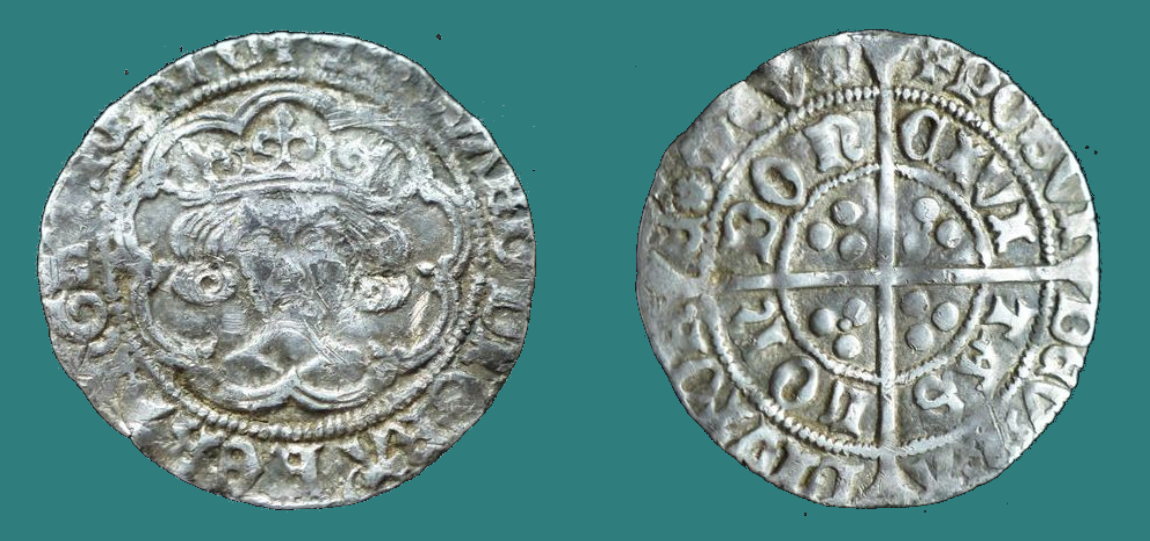 |
Edward IV, a Yorkist) lost the throne for a brief period between Oct.1470 and April 1471, when he was forced to flee to Bruges. Henry VI reigned in the meantime. | ||
|
Henry VII, Archbishop Morton
|
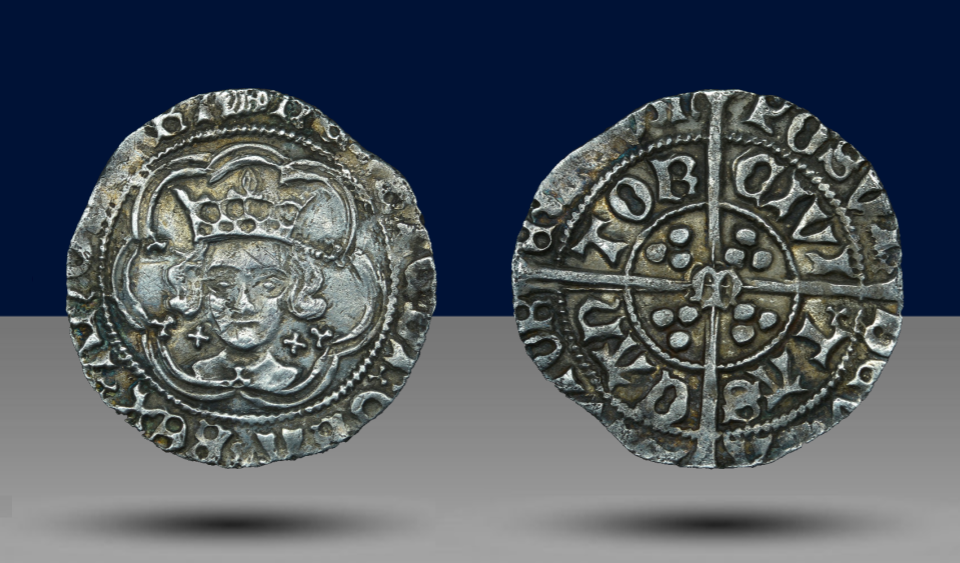 |
John Morton (c. 1420 – 15 September 1500) was an English cleric, civil lawyer and administrator during the period of the Wars of the Roses. He entered royal service under Henry VI and was a trusted councillor under Edward IV and Henry VII. Edward IV made him Bishop of Ely and under Henry VII he became Lord Chancellor, Archbishop of Canterbury and a cardinal. | ||
|
Henry VII
|
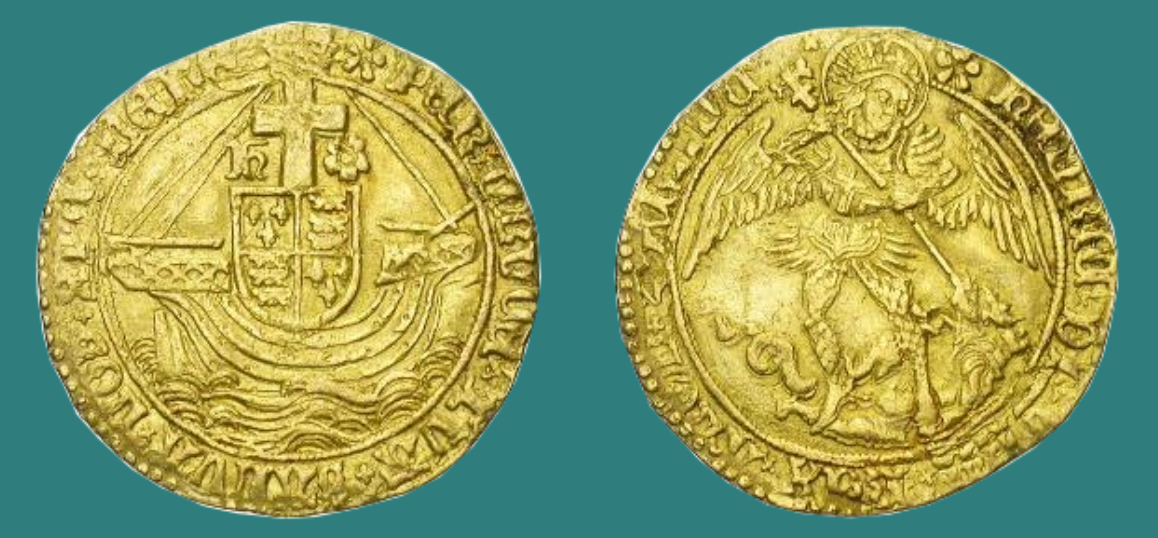 |
The Herentals hoard looks like a gold reserve, possibly built up over a period of quite a few years, & belonging originally to a merchant or a banker who had trade relations with Protestant & anti-Spanish countries. This would not necessarily make him a Protestant himself, but the history of Herentals points in that direction. Spanish troops took the town in spring 1584; the hoard is likely to have been deposited at the approach of the Spanish, approximately 88 years after the coin was minted. | ||