|
The sceatta name derives from an Old English word meaning 'wealth', which has been applied to these small coins since the 17th C. It is likely, however, that they were known to contemporaries as pennies, much like later Anglo-Saxon silver coins. They are diverse, and organised into 100+ types derived from the BM catalogue of the 1890s, & by broader alphabetical classifications in the 1970s. In terms of size, they are typically about half an inch in diameter.
|
| Primary Phase, c.680-710 |
|
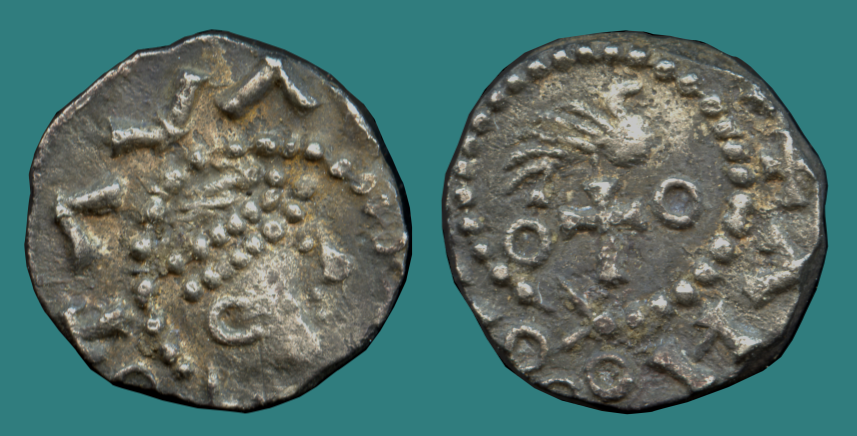
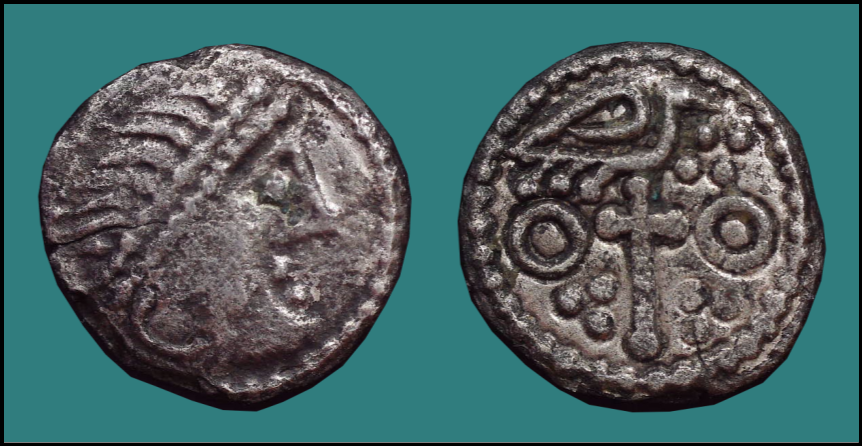
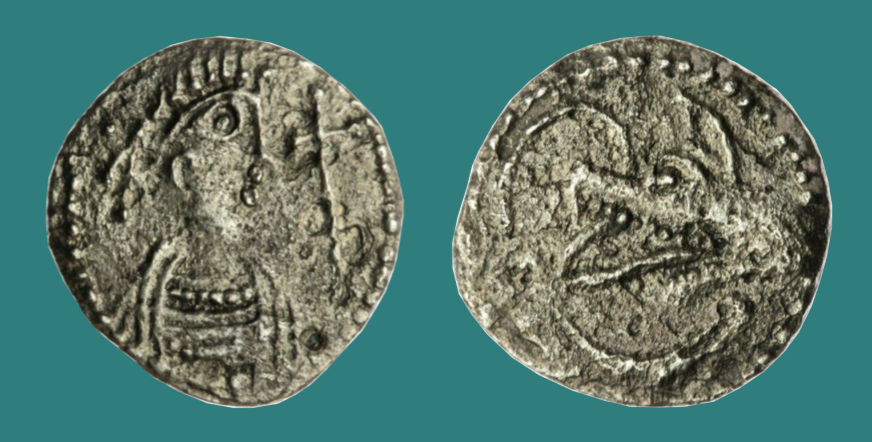
Primary sceatta, c 680-710, series B type, (B1A/C)
- Obv: diademed head, with text around: part of VANTAVMA or similar.
- Rev : bird above cross, within serpent circle, partial text around.
- Weight: xxx gm
- Diameter: xxx mm
- My ref # 1135
|
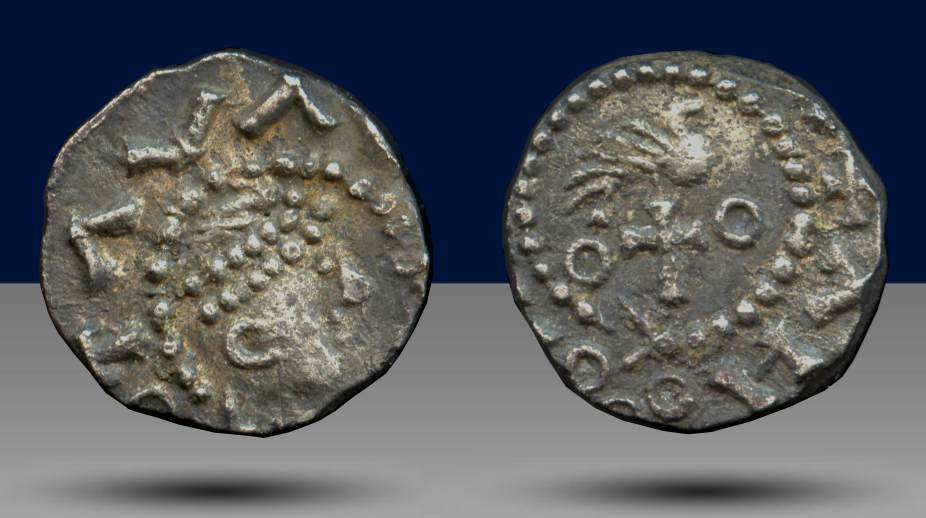 |
Series B has a wide geographic distribution, and is contemporaneous with, or slightly earlier, than series A. Minted in SE or E England. |
|
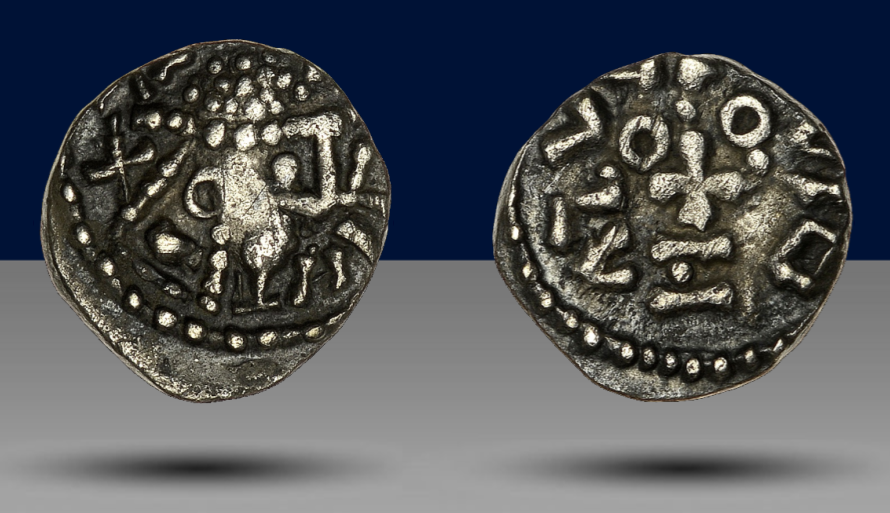
Primary series F
- Type 24, c.695-710 AD.
- Refs: Abramson 106; M 137; N 62; S 781.
- Weight: 1.11 gm
- Diameter: 12.5 mm
- Obv: head right with pelleted head-dress, legend around: [ ] VINT
- Rev. small cross-on-steps, annulets in upper angles, blundered legend around: AZV[]VIO
- ex late Keith Cullum; found at Wetheringsett (Suffolk), August 2013: PAS SF-42EEB4.
- My ref # 4372
|
 |
|
|
Continental Issues, c.695-740 AD
|
|
Primary Series E, Group 87 var.
- Ref: Spink 791
- Weight: 1.2 gm
- Diameter: 12.3 mm
- Obv: Plumed bird:
- Rev: Standard, including cruciform element.
- Provenance: Found in the 1990s on a metal detecting rally near to Henley on Thames.
- My ref # 1363
|
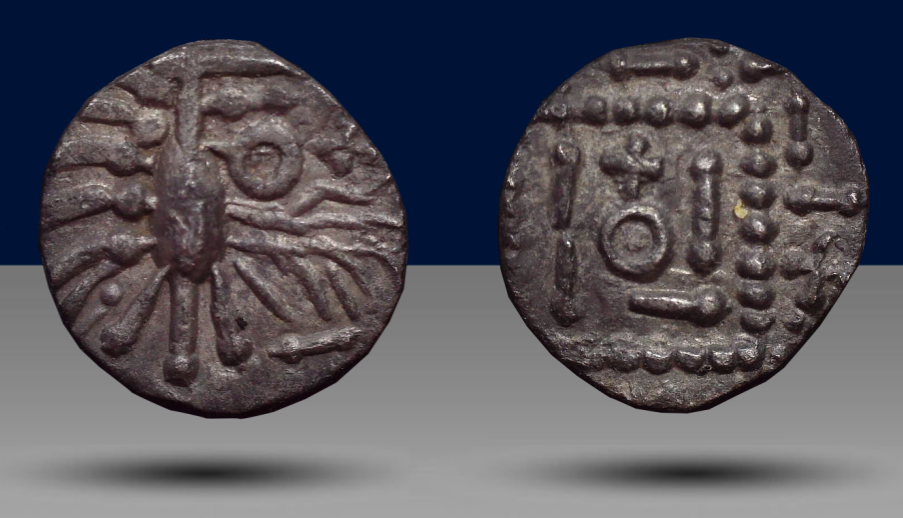 |
Most of the continental sceattas originate from the area of the mouth of the Rhine. Series E, D & X. This is one of the four types of Series E, Group 87 in Abramson's Sceatta List. This being a variation. Note the cruciform element on the reverse. |
|
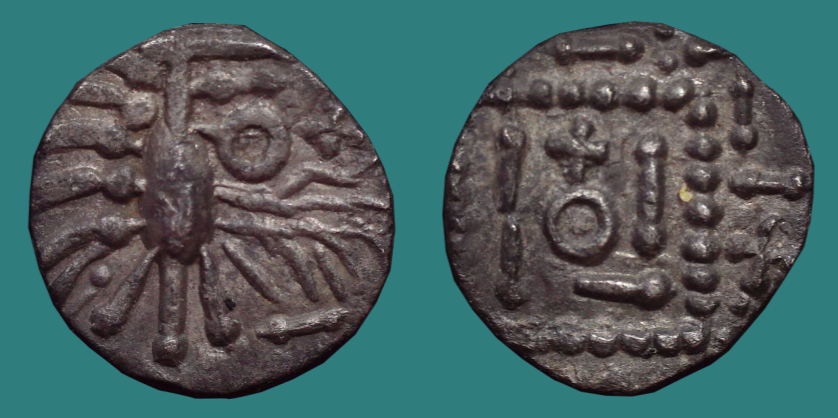
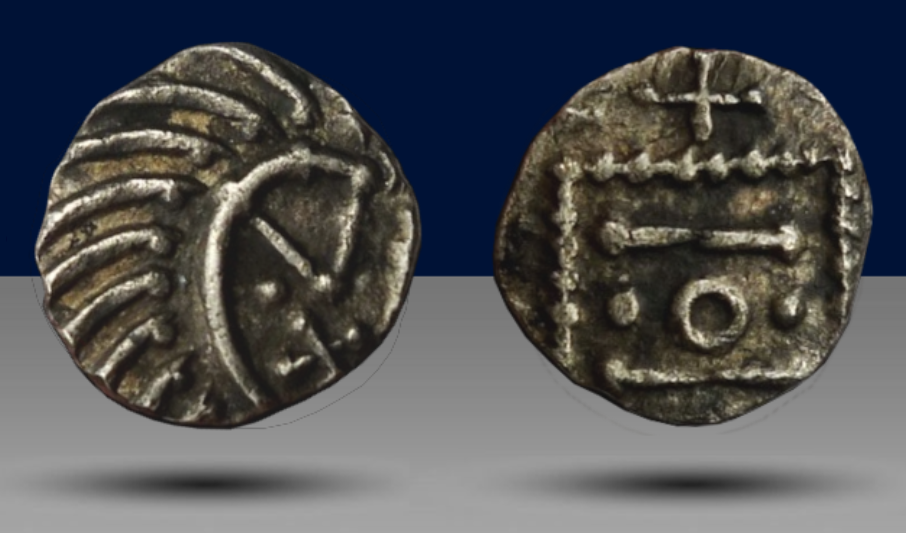
Series E - Var. G1
- Ref: Spink 790G
- Diameter: xxx mm
- Weight: 1.04 gm.
- Obv. Degenerate head evolved into insect like figure with triangular fore leg.
- Rev. Standard with 4 lines and central annulet.
- My ref # 1128
|
 |
|
|
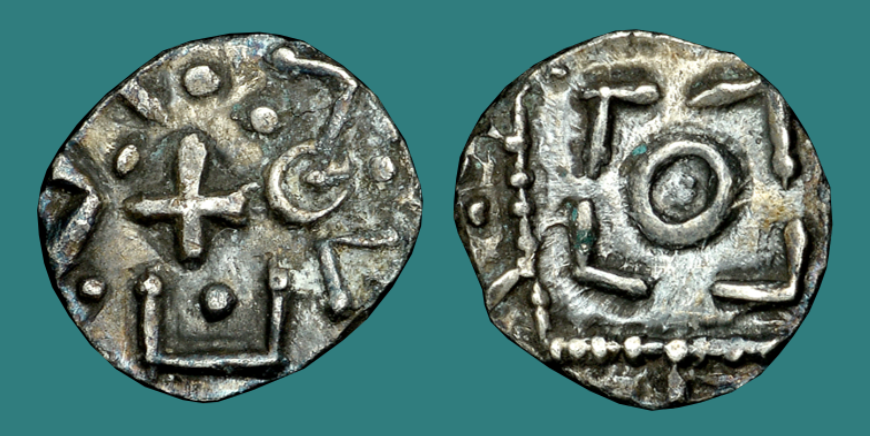
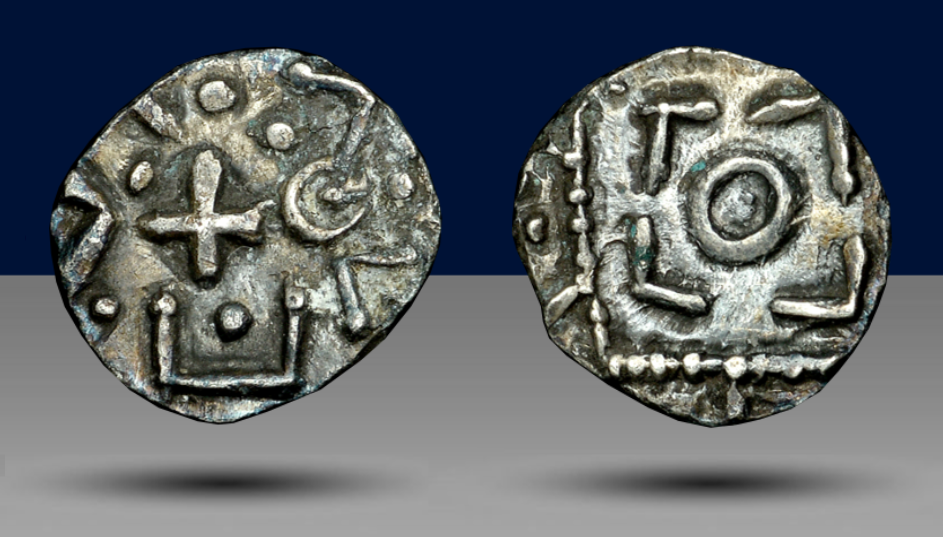
Series D, Continental type 8
- Obv. cross and pellets, pseudo legend around,
- Rev: debased standard.
- Weight: 1.19 gm
- Diameter: xxx mm
- Provenance: DNW 10/3/20, pt lot 306
- My ref: 6101
|
 |
|
|
Secondary Series
|
|
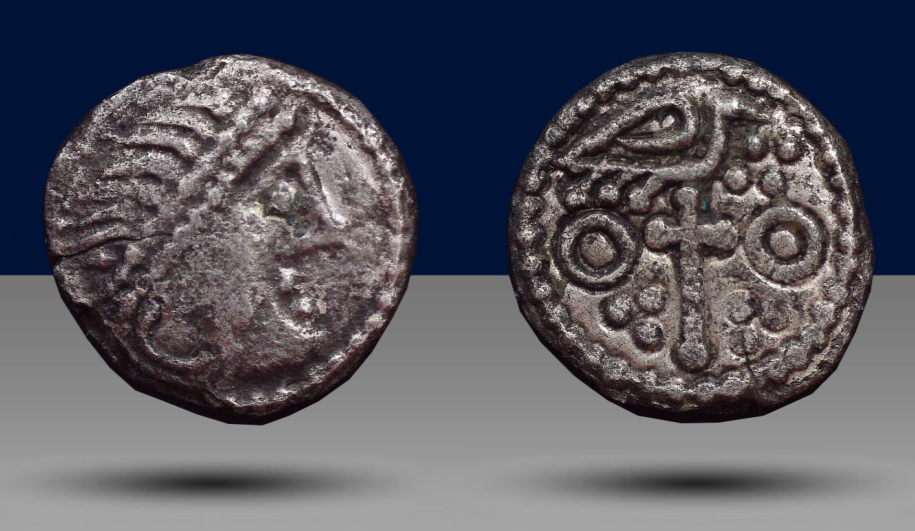
Series J, 710-725 AD
- Obv: Crude diademed head right, crescent ear, pellet lips, braided hair.
- Rev: outline bird, probably a dove, on cross pommee, trefoils in lower angles.
- Weight: xxxgm
- Diameter: 12 mm
- Ref: Abramson 18-20 (type 85).
- My ref #: 1158
|
 |
|
|
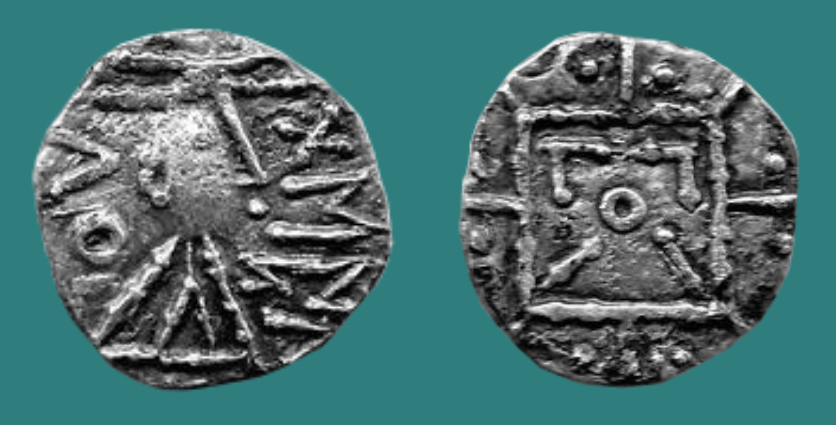
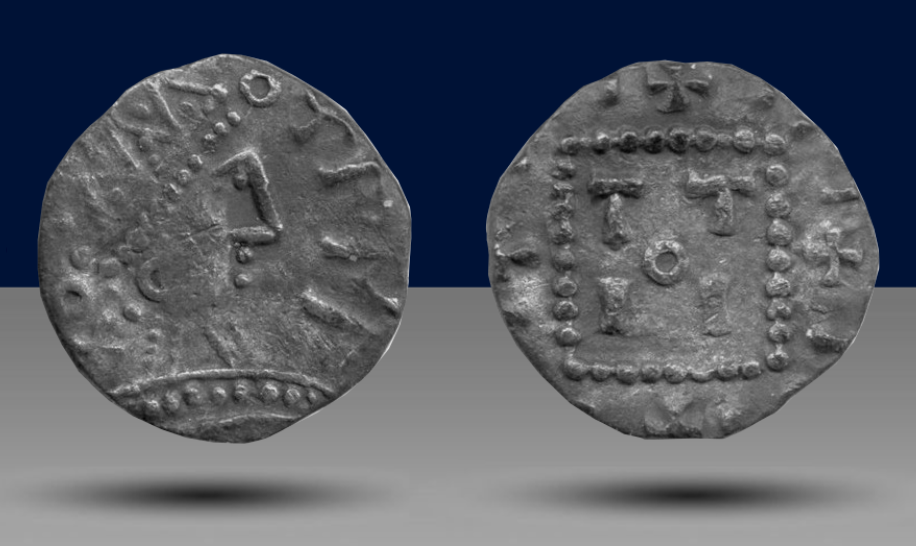
Series R4 (710-760 A.D.)
- Refs: cf. M 391ff; N 157; S 813
- Obv: Radiate head right, EPA in runes in front, x and annulet at either end of "crownband".
- Rev: a debased Standard, "TOTII"
- Weight: 1.15 gm
- Diameter: xxx
- My Ref: 1120
|
 |
|
|
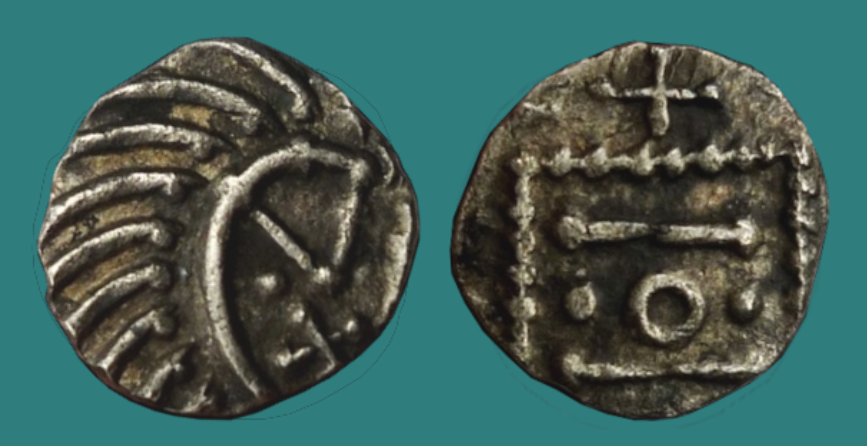
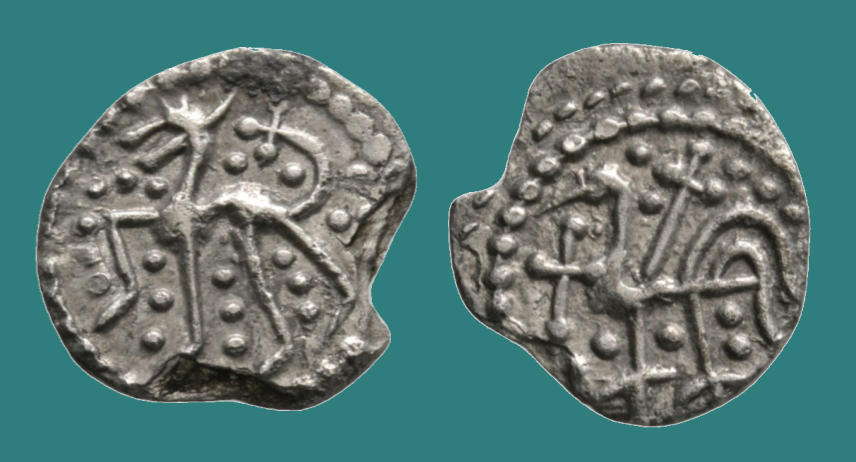
Ser. Q - Type IID, c. AD 725-745
- Re: Compare to Tony Abramson auction pt 1, lot #269, BMC 44.
- Obv: quadruped left with tail above & pellets in field, within pelletted circle.
- Rev: bird left with cross above back, within two pelletted circles.
- Weight: 0.76 gm
- Diameter: 13.1 mm
- Provenance: A metal detecting find from Skirpenbeck parish, about 10 km east of York. PAS: YORYM-C69CEA,
- My ref # 6126
|
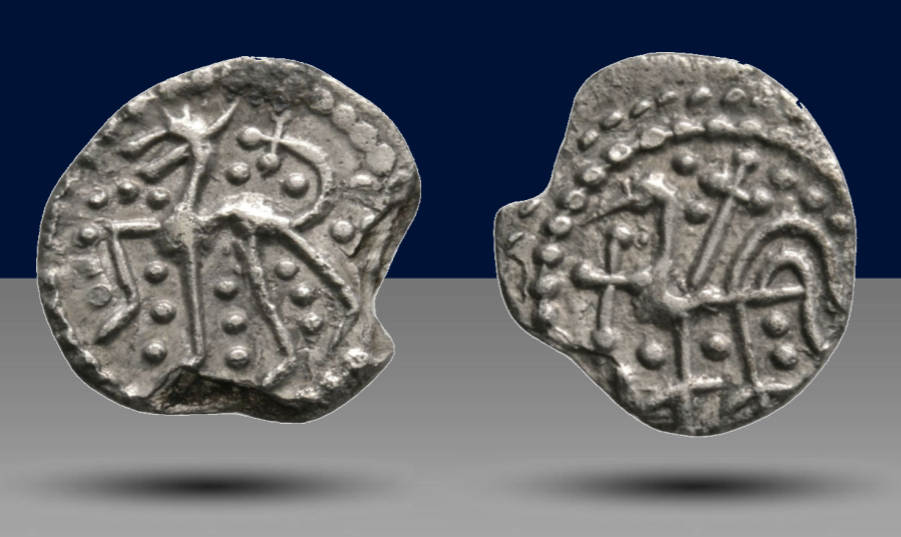 |
Coins of this period become debased from the second quarter of the 8th century. As this coin is of good quality silver it is likely to date to the early 8th century. |
|
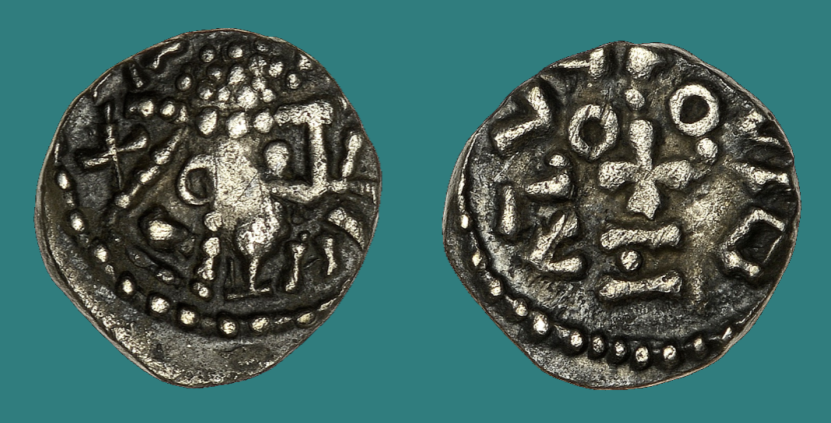
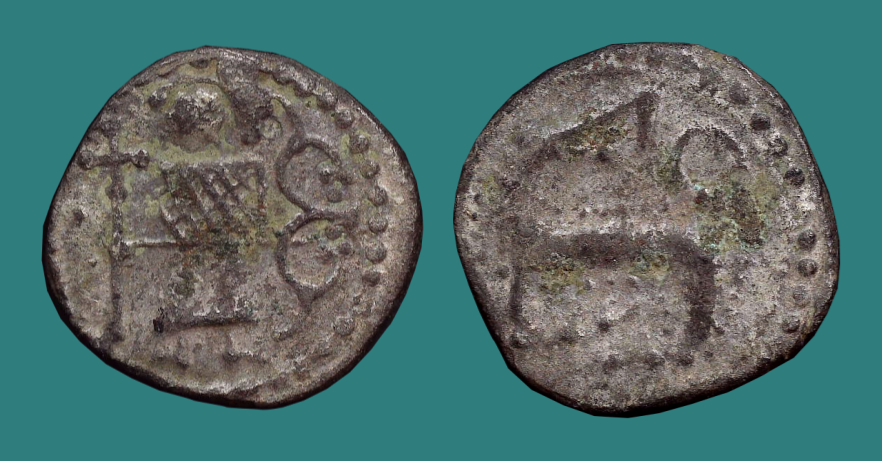
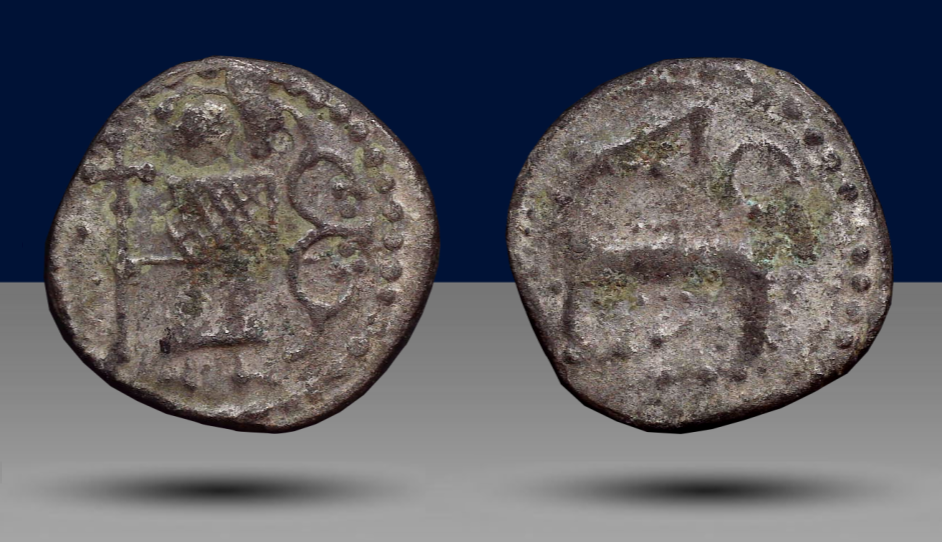
Series K/N, Type 16/41 Mule
- Refs: SL 2, 37-40; SCBI 69, 546 this coin; Spink 828.
- Extremely rare.
- Obv: facing figure standing, looking left, wearing cynehelm and cross-hatched tabard with flared tunic, holding long cross pommée in both hands left, 'true vine' (crux foliata?) or bow right, feet splayed,
- Rev. crested monster left, looking back, crest left, gaping jaws, pellet outline, curled tail raised, clawed feet below,
- Weight: 0.90 gm
- Diameter: xxx
- Reportedly found in East Anglia
- Provenance: T.Abramson Coll'n, Spink auction 30/09/21, lot 821
- My ref # 6133
|
 |
|
|
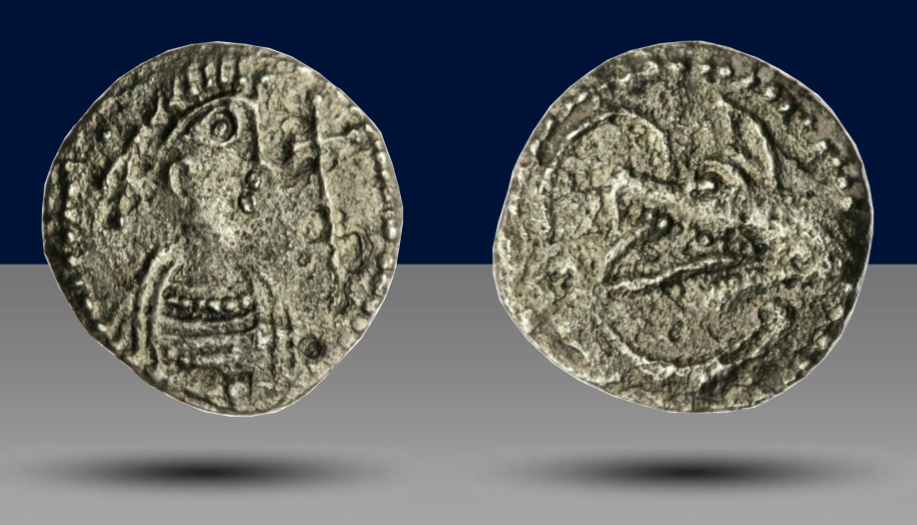
Series K, type 33.
- Refs: SL 38-20; SCBI 69, 432 this coin; T&S pp. 388-91 and 405, 306
- Obv: tall diademed bust right, almond-shaped eye, wreath ties behind, cross pommée before.
- Rev:wolf head left, erect ear, pellet eye, tongue curling extravagantly around field
- Weight: 1.20 gm
- Diameter: xxx
- Provenance: T.Abramson Coll'n, Spink auction 30/09/21, lot 830
- My ref # 6134
|
 |
|
|
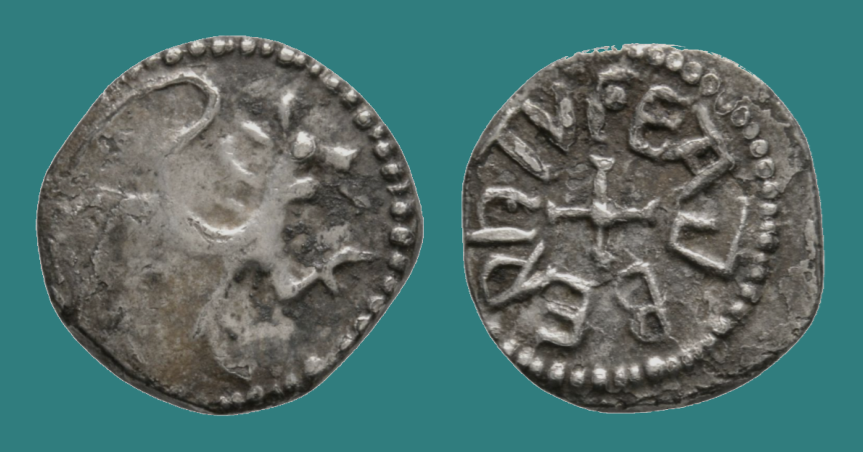
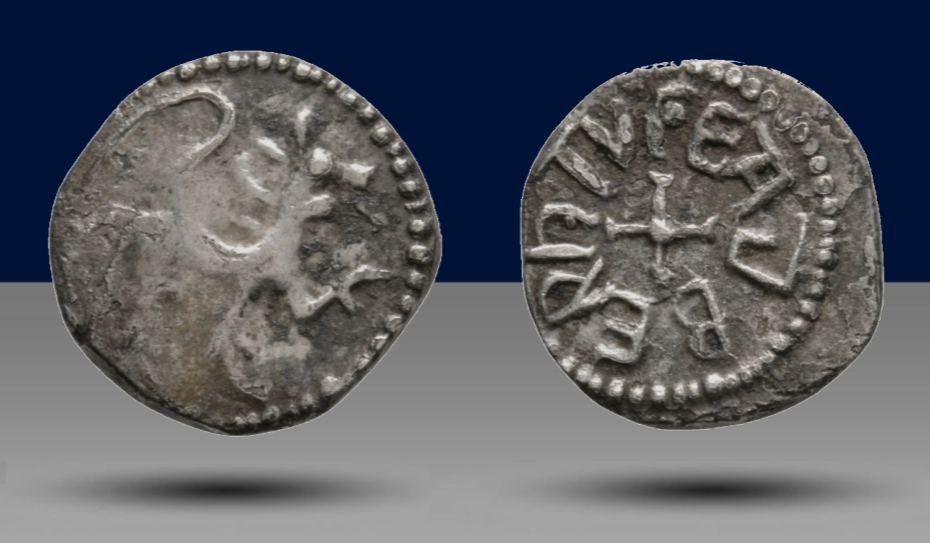
Series Y, Eadberht (737-758)
- Obv: stylised stag to right, within pelletted circle.
- Rev: EADBERHTVS around small cross in centre, within pelletted circle.
- Weight: 0.91 gm
- Diameter: xxx
- Refs: S.847; North Vol 1,no. 177.
- Provenance: Abramson sale:343., Timeline, 28-Feb-21. Lot #8024.
- Found: near York, 2017. PAS: YORYM-C881BF.
- My ref # 6127
|
 |
Eadberht was king of Northumbria from 737 or 738 to 758. He was the brother of Ecgbert, Archbishop of York. His reign is seen as a return to the imperial ambitions of seventh-century Northumbria and may represent a period of economic prosperity. He faced internal opposition from rival dynasties and at least two actual or potential rivals were killed during his reign. In 758 he abdicated in favour of his son Oswulf and became a monk at York. |
|
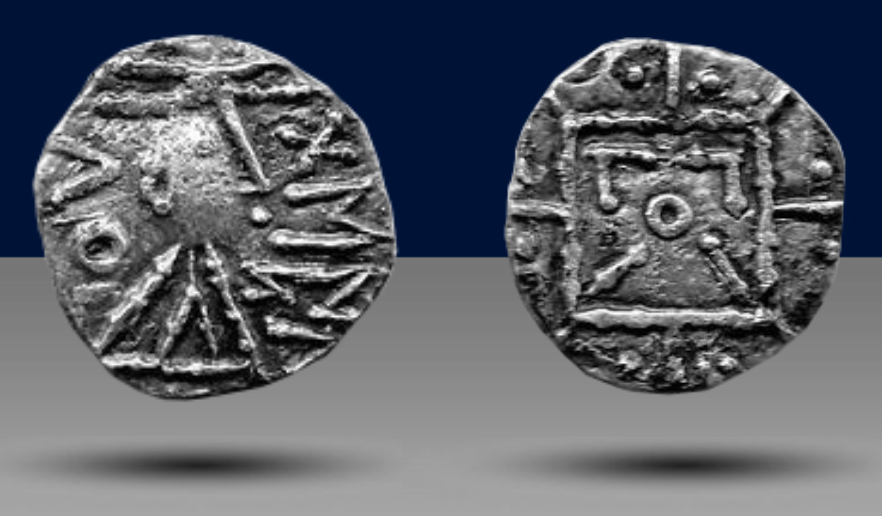
Series R, c. 735-50 AD
- Obv: bust right, runic inscription EPA.
- Rev: standard.
- Weight: 0.94 gm
- Diameter: 12.5 mm
- Refs: Abramson (2012): Grp 11-40 sim.
- Provenance: Ebay, with Alan Cherry dealer ticket.
- My ref # 1157
|
 |
|
| |
|
|
| Stycas |
|
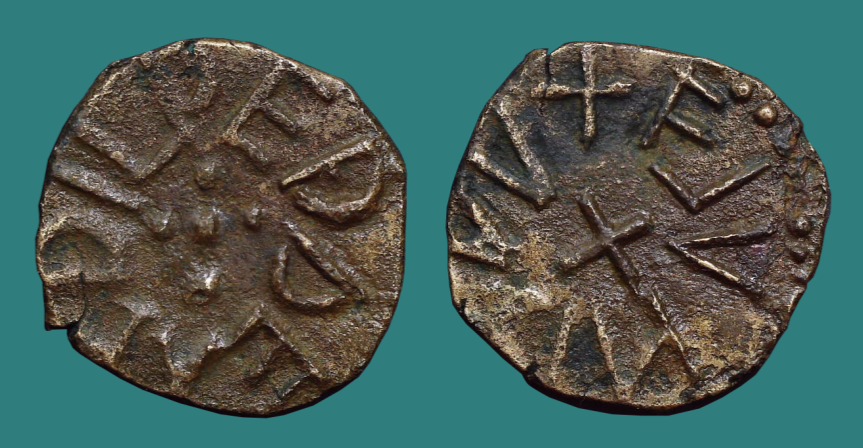
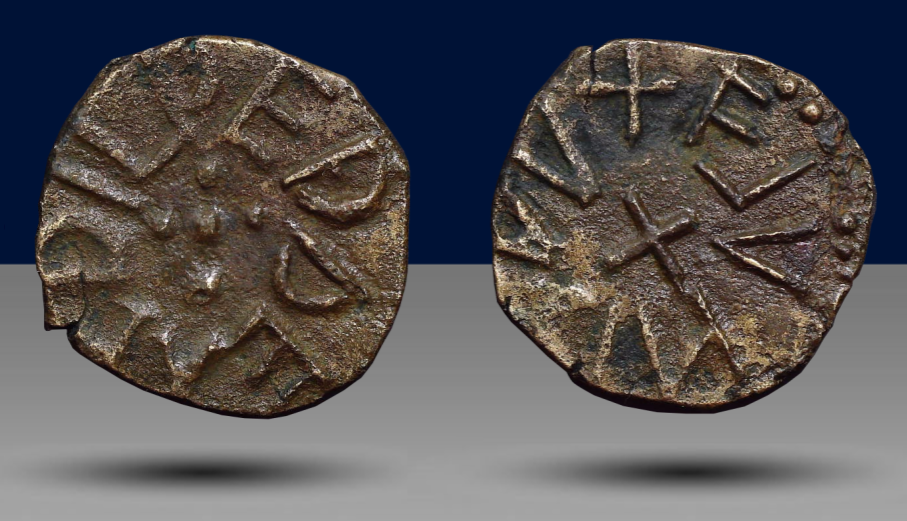
Aethelred II of Northumbria
- Irregular styca
- Obv: Central cross formed of 5 pellets
- Rev: retrograde with ..NVLF at end.
- Similar to Pirie 1816, which is imitative of Aethelred II/Eardwulf, as many of the irregulars are.
- The moneyer's name is retrograde and, given the final 3 characters VLF, the choice is between Eanwulf or Eardwulf
- Weight: 1.13 gm
- Diameter: xxx
- My ref # 1242
|
 |
Relatively little is known of his reign from the surviving documentary record. He appears to have been expelled in favour of Rædwulf, who was killed the same year, fighting against Vikings, and Æthelred was restored to power. He was assassinated a few years later, but no further details are known of his murder.
The new styca coinage, small brass coins containing very little silver and much zinc, which began in his father's reign, continued in Æthelred's. Large numbers of his styca coins have been found, minted in York by a number of moneyers.
|
| |
|
|
| |
|
|
| |
|
|